


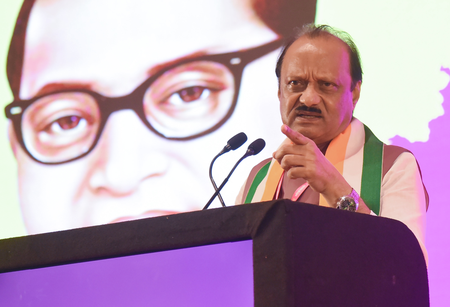
Despite facing criticism from the BJP over remarks on an irrigation scam, Maharashtra Deputy Chief Minister Ajit Pawar, also the NCP chief, is strategically countering the BJP in the Pune and Pimpri-Chinchwad Municipal Corporations. While both parties are allies at the state level, the upcoming civic elections on January 15 have transformed their relationship into a fierce local competition. Ajit Pawar has surprised many by reconciling with his uncle, Sharad Pawar, specifically for these municipal polls.
In a significant development, despite a rift in 2023, the two factions of the NCP have come together for a local alliance. Ajit Pawar and Supriya Sule recently presented a joint manifesto for Pune, aiming to consolidate the “Pawar Parivar” votes and maintain the NCP’s voter base intact to prevent any advantage for the BJP from division in Maratha and local loyalist votes. Ajit Pawar’s strategy involves launching an aggressive “Alarm Campaign” targeting the BJP’s tenure in the Pune and Pimpri-Chinchwad Municipal Corporations from 2017 to 2022.
Ajit Pawar has accused the BJP of plunging the once affluent Pimpri-Chinchwad Municipal Corporation into debt and mismanagement, highlighting the depletion of fixed deposits during their rule. Employing strong language, he has labeled the local BJP leadership as “corrupt demons” and criticized their handling of project costs, particularly in CCTV installations and Smart City initiatives. By strategically welcoming BJP leaders who were overlooked by their party, like Amol Balwadkar and Shankar Chinchwade, Ajit Pawar aims to counter the BJP’s surplus of aspirants.
Positioning the NCP as a merit-based alternative for neglected local leaders, Ajit Pawar is emphasizing a “friendly contest” at the state level while taking a tough stance locally. He has clarified that his battle is not against PM Modi or Devendra Fadnavis but with local BJP figures Murlidhar Mohol, Ganesh Bidkar, and Chandrakant Patil. Ajit Pawar is leveraging his track record of infrastructure development to contrast the current challenges faced by Pune, highlighting his past contributions to the region’s growth.
