


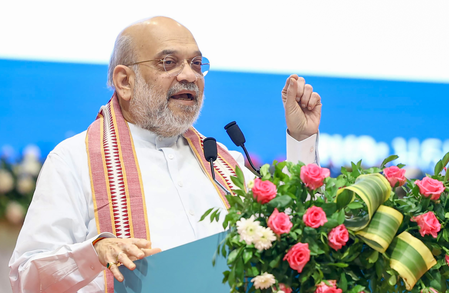
Union Home and Cooperation Minister Amit Shah introduced ‘Bharat Taxi’ in Gujarat, emphasizing its unique cooperative approach that values drivers as “Sarathis” rather than mere service providers. Shah highlighted the significance of recognizing drivers’ dignity and ownership within the cooperative movement. He pointed out the difference in perspective between traditional app-based ride-hailing platforms and Bharat Taxi, stressing the cooperative model’s focus on respect and inclusivity.
Shah noted the evolution of India’s mobility sector, highlighting the significant changes in the role of taxi services over the past few decades. He mentioned the widespread adoption of taxis in everyday life, with demand extending to almost every household. Shah also shared an anecdote from his visit to the Kumbh Mela in Prayagraj, where motorcycles were used as taxis due to restrictions on four-wheelers, illustrating the sector’s adaptability and innovation.
The Home Minister underscored the transformation of Gujarat’s transport system, particularly the integration of auto-rickshaws into organized taxi services. He emphasized the vital role of rickshaws in enhancing mobility and expanding the scope of taxi operations in the state. Shah highlighted the cooperative model’s objective of empowering drivers by making them stakeholders in Bharat Taxi, ensuring their dignity, security, and future prosperity through ownership and shared responsibility.
Shah outlined the cooperative model’s aim to shift the paradigm for transport service providers, enabling them to actively participate in the enterprise rather than relying solely on private digital platforms for livelihood. By involving drivers as shareholders in Bharat Taxi, the cooperative initiative seeks to establish a sustainable and inclusive framework that prioritizes the well-being and interests of those involved.
