


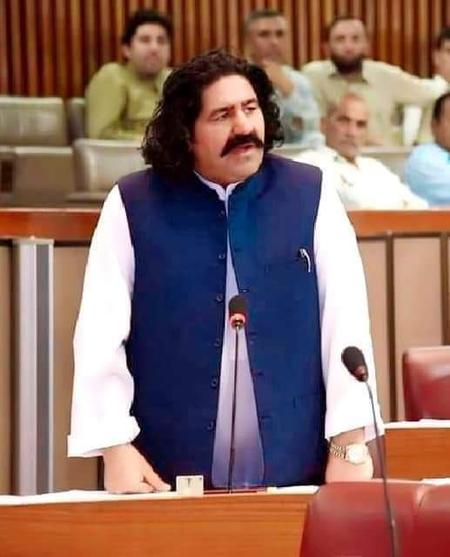
Global rights organization Amnesty International has called for the immediate release of Ali Wazir, a human rights activist and former lawmaker in Pakistan. Wazir has been detained for 20 months, and ongoing legal actions against him are deemed “arbitrary and unlawful” by Amnesty International. Pakistani authorities arrested Wazir in Hyderabad on March 16, charging him under anti-terrorism laws shortly after he was granted bail in a separate case by the Sindh High Court on the same day.
Previously, Wazir was arrested in December 2020 on sedition charges related to his critical speeches against state institutions. Despite being imprisoned for over two years, he was released in February 2023 following acquittal in one case and bail in others. In August 2023, Wazir was once again arrested along with other members of the Pashtun Tahafuz Movement (PTM) and a human rights lawyer, only to be released later. His repeated arrests are seen as part of a broader effort to suppress his activism, with his family facing threats from armed groups resulting in the deaths of several relatives, including his father, brothers, uncles, and cousins.
Amnesty International emphasized that Wazir has been targeted with numerous charges since 2020, seemingly aimed at prolonging his detention and stifling his advocacy work. He has been vocal against extrajudicial killings, enforced disappearances, and discrimination against the Pashtun minority. The organization highlighted the need for Pakistani authorities to release Wazir immediately, citing the unjust and arbitrary nature of his detention and legal proceedings.
The crackdown on the Pashtun Tahafuz Movement (PTM) by Pakistani authorities has escalated, leading to the group’s ban under anti-terrorism laws in October 2024. Despite a pending request for the ban’s reversal, the Peshawar High Court upheld it in March this year. Amnesty International pointed out that preventive detention laws have been misused to keep Wazir in custody without a fair trial, with repeated extensions granted under these laws to prevent his release despite court-issued bails.
