


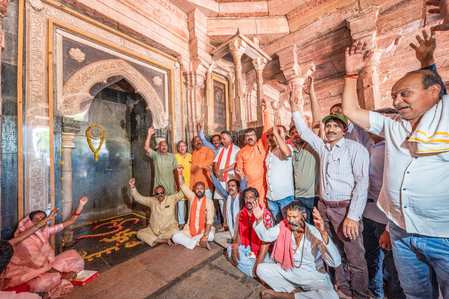
Following a significant judgment by the Indore bench of the Madhya Pradesh High Court, the Archaeological Survey of India has issued an official order regarding the Bhojshala complex in the Dhar district of Madhya Pradesh. The order, dated May 16, 2026, grants unrestricted access to the Hindu community for observing ancient practices of learning and worshiping Goddess Saraswati at the site. Under the new guidelines, the Hindu community can access the complex, known for its history as a center for Sanskrit grammar, language, and literature.
The Bhojshala complex, while open to the Hindu community, will remain a protected monument under the Ancient Monuments and Archaeological Sites and Remains Act of 1958. The Superintending Archaeologist, in consultation with the local district administration, will determine the timings for visitors and devotees. The recent order supersedes all previous directives concerning the monument and emphasizes collaboration between the Archaeological Survey of India, the Superintending Archaeologist, and district authorities for defining permissible activities for learning and worship.
In response to a High Court order, the Archaeological Survey of India issued these new directions, recognizing the Bhojshala structure as a protected monument and a temple dedicated to Goddess Vagdevi, also known as Goddess Saraswati. The court’s ruling highlighted the historical significance of Bhojshala as an ancient center of Sanskrit learning, supported by archaeological research. The High Court order overturned a previous directive from 2003 that restricted Hindu worship rights within the premises while allowing prayers by the Muslim community.
