


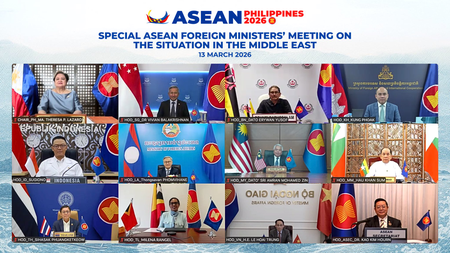
The Foreign ministers of Association of Southeast Asian Nations (ASEAN) emphasized the urgent need for a halt to hostilities in the Middle East. They urged all parties involved to show restraint, avoid actions that could escalate tensions, and resolve disputes through peaceful dialogue to maintain peace and stability in the region. The call for peace came after a special virtual meeting where the ministers discussed the escalating conflict in the Middle East and its implications for ASEAN.
The ministers expressed deep concern over the recent escalation of conflict in the Middle East, particularly the attacks by Israel and the United States on Iran, and subsequent retaliatory actions. These actions have heightened tensions in the region and pose a significant threat to civilian lives and global peace. The meeting, led by the current ASEAN Chair Philippines, stressed the importance of upholding international law, including the UN Charter, and protecting civilians and infrastructure during armed conflicts.
In addition to addressing the immediate crisis, the Foreign Ministers also deliberated on the broader impacts of the Middle East conflict on global economic activities, especially energy markets and transportation routes. They emphasized the need to maintain stable energy supply chains, maritime trade routes, and ensure uninterrupted flow of essential goods to support economic stability in ASEAN. The ministers underscored the importance of regional solidarity, economic integration, and coordinated efforts to mitigate the economic repercussions of external shocks on ASEAN countries.
The meeting highlighted the significance of enhancing regional connectivity, boosting energy security, and diversifying energy sources, including renewable options. It also emphasized the importance of facilitating trade, improving logistics connectivity, and enhancing supply chain resilience to ensure consistent access to affordable essential goods, particularly food, across ASEAN. Established in 1967, ASEAN consists of 11 member states and plays a crucial role in promoting regional cooperation and stability.
