


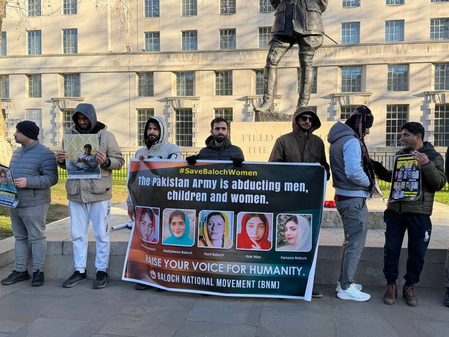
Baloch National Movement (BNM) Chairman Naseem Baloch criticized Pakistan for wrongly branding the Baloch freedom movement as “terrorism” to hide its failures. He stressed that the struggle is a legitimate resistance by indigenous people against “colonial occupation.”
In an interview with Afghanistan’s Rana TV, Naseem clarified that the Baloch fight is not terrorism but a genuine movement against colonial rule. He highlighted Pakistan’s habit of misrepresenting their resistance as terrorism to deflect attention from its shortcomings.
Responding to queries about human rights in Balochistan, Naseem described the situation as “catastrophic.” He mentioned a report by Paank, the BNM’s Human Rights Department, which documented over 1,000 cases of enforced disappearances in 2025, along with more than 200 extrajudicial killings.
Naseem also pointed out the discovery of mass graves in various Balochistan regions, including Panjgur, Khuzdar, Dera Bugti, and Tootak. He cited the recovery of 169 bodies in Tootak, many of which were unidentified, terming it as a form of genocide.
Addressing the rising involvement of women in the Baloch resistance, Naseem explained that extreme repression has compelled even those who typically avoid conflict to participate. He highlighted the activism of Baloch women like Karima Baloch, Mahrang Baloch, and Sammi Deen Baloch, who come from victim families and face arrests and imprisonment.
When discussing the international community’s role, Naseem expressed disappointment, stating that despite efforts at the UN, EU, and other forums, Balochistan remains under a “media blackout.” He urged for more substantial global pressure on Pakistan to prevent its continued oppressive actions.
In a message to the world through Rana TV, Naseem warned that without international intervention, Pakistan will persist as a ruthless and lawless state.
