

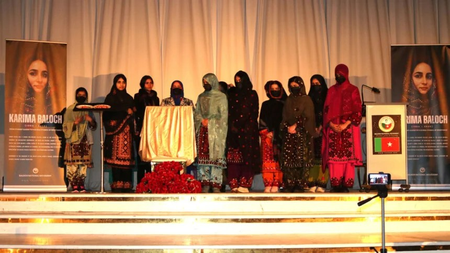
The Baloch National Movement (BNM) organized a seminar in London to honor the fifth death anniversary of human rights activist Banuk Karima Baloch. The event shed light on the systematic oppression by Pakistani authorities in Balochistan. Political leaders, intellectuals, human rights activists, and representatives from various communities in Pakistan-occupied Kashmir and Pakistan-occupied Gilgit-Baltistan gathered to express solidarity with the Balochistan people.
Among the speakers were BNM Chairman Naseem Baloch, author Naseer Dashti, University of London scholar Burzine Waghmar, World Sindhi Congress Deputy Organiser Fahmeeda Khushik, human rights activist Noor-e-Maryam Kanwar, Pashtun Tahafuz Movement representative Brakhna Sayyad, and Banuk Karima’s cousin, Mehlab Kambar.
During the event, BNP Chairman Naseem Baloch highlighted that Karima’s life and sacrifice unveiled the colonial nature of the Pakistani state and its systematic repression of oppressed nations. He criticized the selective application of human rights principles by Western governments, questioning the silence on occupation and oppression in Balochistan.
Naseem emphasized that Karima not only challenged Pakistani military occupation but also resisted the occupation of history, language, resources, and political authority. He concluded by stating that freedom is a natural human instinct and regional peace is unattainable until Pakistan’s colonial structure is dismantled and oppressed nations achieve freedom.
Meanwhile, Burzine Waghmar condemned Pakistan’s human rights record and blamed the country’s deep state for the death of Karima Baloch. He pointed out that Pakistan takes advantage of international neglect and impunity to target peaceful activists even in exile.
Human rights activist Noor-e-Maryam Kanwar highlighted the brutal method of collective punishment used against the people of Balochistan. She mentioned the enforced disappearance of Mahzeb Shafiq’s father, a prominent Baloch human rights activist, as an example of how Pakistani authorities target families to suppress resistance.
Pashtun Tahafuz Movement representative Barkhna Syed expressed support for the Baloch struggle, noting the prevalence of enforced disappearances and collective punishment in Pashtun regions. Karima’s cousin, Mehlab Kambar, remembered her relentless fight for justice, national identity, and collective strength through rallies and protests for enforced disappeared persons and against the genocide in Balochistan.
Baloch National Movement seminar in London commemorates Banuk Karima Baloch’s death anniversary


Indian Community Editorial Team
The Indian Community Editorial Team curates, verifies, and publishes stories that matter to Indians worldwide. From culture and community to business and innovation, our mission is to spotlight voices, ideas, and events that bring our global community closer together. Have news or a story to share? Submit it to us at [email protected].
Add A Comment