


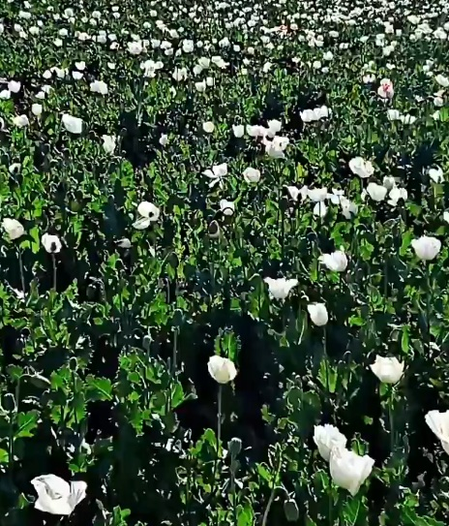
Balochistan in Pakistan is witnessing a surge in poppy cultivation, raising worries among locals about the persistent illicit trade despite occasional crop destruction. Following the Taliban’s ban on poppy farming in Afghanistan last year, the focus seems to have shifted to Balochistan, as reported by ‘The Diplomat’. Concerns are growing among communities in the region, although the government has not yet prioritized this issue.
Pakistan’s Anti-Narcotics Force recently seized over 1,350 kilograms of narcotics valued at 77.85 million rupees through operations nationwide in early February. This led to the apprehension of nine individuals, triggering further inquiries. The drug network, according to the ANF, was attempting to smuggle narcotics from Balochistan’s Panjgur district through Turbat city to coastal areas like Gwadar and Pasni, with plans to transport them via sea routes to Gulf nations, Yemen, and Tanzania.
The recent ANF operation, although seemingly routine, is part of a broader trend against organized drug trafficking networks. Reports from various agencies suggest significant changes may be occurring in the region due to historical poppy cultivation practices and the lack of legal employment opportunities, infrastructure, and political stability, pushing rural populations towards illicit farming.
The production and export of processed opium like heroin and methamphetamine have long been prevalent in Pakistan, even predating the Taliban’s ban. This poses a severe threat, especially to the youth population, with more than half of Pakistan’s population under 20 years old and a significant portion vulnerable to drug addiction. The report also highlighted alarming statistics on drug-related deaths and substance abuse rates in various regions of Pakistan.
