


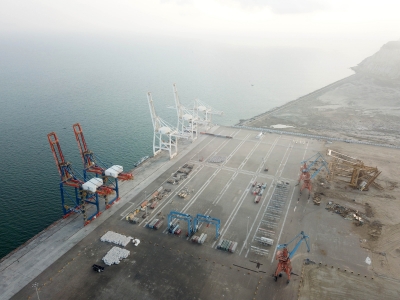
Balochistan, a province in Pakistan rich in natural resources like gas, coal, copper, and gold, continues to face poverty, as per a recent report. The region perceives the China-Pakistan Economic Corridor (CPEC) more as dispossession than a development opportunity, with resource revenues not being reinvested locally, worsening economic inequality and political alienation. Despite technological advancements at Gwadar port, basic necessities such as water, healthcare, and stable jobs are lacking for the province’s communities.
The report emphasizes that while Gwadar has seen development, the lack of integration with the local communities fuels instability, especially in areas with unresolved historical grievances. The future of Balochistan and the success of CPEC hinge on Pakistan’s ability to adopt a more inclusive federal structure that values regional identities and local governance. CPEC is viewed as a means of economic revival for Islamabad and a strategic access point to the Arabian Sea for Beijing, enhancing trade routes diversification.
Balochistan has been marginalized to a mere transit zone rather than a key player in the planning process. The centralized decision-making with minimal local input and the unequal benefits favoring non-local laborers have raised concerns about demographic displacement and cultural dilution. The province has witnessed violence against Chinese workers and installations, leading to increased security measures by Pakistan, including dedicated protection and surveillance units for CPEC safeguarding.
The securitization of the region has skewed governance priorities, according to the report.
