


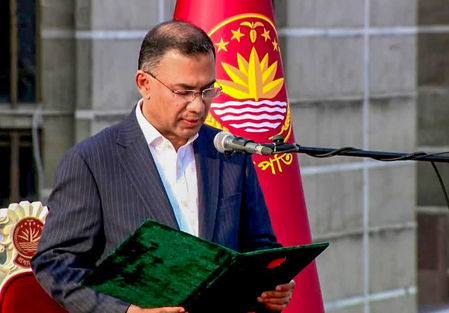
Bangladesh, led by new Prime Minister Tarique Rahman, encounters structural hurdles in managing trade relations with the US and China, both crucial economic partners, as per a recent Nikkei Asia report. The report notes the demanding terms of a US trade deal, emphasizing Rahman’s need for a delicate balance between Washington and Beijing, who are competing for influence in Bangladesh. While the US emphasizes market access, security cooperation, and regulatory influence, China offers infrastructure, industrial integration, and defense supplies.
The US Supreme Court’s rejection of President Donald Trump’s reciprocal tariffs reveals Washington’s intention to prevent Bangladesh from aligning with its competitors. Failure to adhere to the agreed terms could result in tariffs reverting to 37% from the current 19%, with Bangladesh expected to comply with US export controls and sanctions if necessary. The report highlights that any new US trade or border measures on economic or national security grounds would require Dhaka’s consultation and potential corresponding actions.
Chinese foreign direct investment (FDI) in Bangladesh has reached approximately $3 billion, with Beijing granting zero-tariff access to Bangladeshi exports and those of other least developed countries. Navigating the global power rivalry poses significant challenges for Bangladesh, according to Faiz Sobhan, the senior research director at the Bangladesh Enterprise Institute in Dhaka. Bangladesh’s heavy reliance on the US market for exports increases the risk of breaching the trade agreement.
Bangladesh’s industrial ecosystem heavily relies on Chinese supplies, particularly in the garment sector, as highlighted in the report. While the US holds leverage in trade and security, China’s influence is deeply entrenched in Bangladesh’s manufacturing sector, making the balancing act even more complex for the country.
