


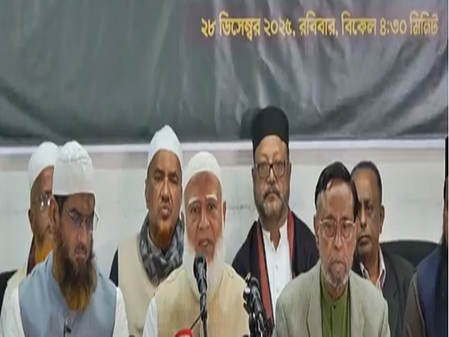
The removal of the Sheikh Hasina-led government in Bangladesh last year has paved the way for radical and Islamist groups to gain prominence, leading to growing instability. Bangladesh Jamaat-e-Islami (BJI), a radical organization, has been striving to rebrand itself as a moderate party, but its true agenda of supporting radical elements and showing hostility towards minorities has been exposed. Under the interim leadership of Muhammad Yunus, Bangladesh is at a critical juncture, torn between moderate voices and radical influences.
Despite Yunus advocating for peace, Bangladesh’s political landscape is increasingly leaning towards Islamic radicalism, marked by bigotry and hatred, which are core elements of Bangladesh Jamaat-e-Islami. The group’s attempts to portray itself as a pro-uprising force have been criticized as superficial, as it continues to promote violence against minorities and uphold Sharia-based governance over constitutional laws. The resurgence of Jamaat and the surge in Islamic rhetoric in mainstream politics have coincided with political upheaval in Bangladesh.
As the country gears up for national elections on February 12, the absence of the Awami League has positioned the Bangladesh Nationalist Party (BNP), Bangladesh Jamaat-e-Islami (BJI), and the National Citizen’s Party (NCP) as key contenders. While the BNP plans to run independently, Jamaat-e-Islami has formed an electoral alliance with seven like-minded parties. The rise of Islamist radicalism and the potential political influence of Jamaat pose significant challenges to Bangladesh’s democratic process and social harmony.
