


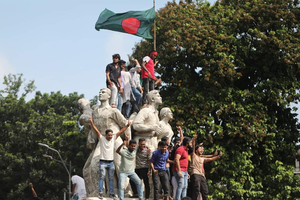
Bangladesh, established in 1972, initially saw economic growth and attracted global investments with a favorable business environment. However, recent trends indicate a shift as issues like polarization, radicalism, and fundamentalism overshadow its progress. The education sector expanded rapidly over the past two decades, leading to a surge in graduates from numerous colleges and universities.
A critical report in the Business Standard, authored by a retired Army officer, sheds light on the high levels of unemployment, the lack of higher education facilities, and inadequate training institutes for skilled labor. The report reveals that a significant number of graduates, approximately 885,000, are currently unemployed, exacerbating the nation’s job crisis.
The unemployment rate among graduates in Bangladesh is alarmingly high at around 13.5%, significantly surpassing the national average. Despite the presence of over 7,800 technical and vocational institutions, enrollment remains low, and the outcomes are unsatisfactory. Vocational education, intended to bridge the gap to employment, has not been successful in meeting its objectives, further complicating the employment scenario in the country.
The demographic landscape of Bangladesh is undergoing a crucial phase, with a majority of the population falling within the working-age bracket. However, the country faces challenges in leveraging this demographic dividend due to inadequate preparation and infrastructure. While the working-age population is projected to peak between 2025 and 2035, Bangladesh struggles to capitalize on this potential, hindering its advancement on the global stage.
Comparisons with other Asian nations like South Korea, Singapore, and China underscore the importance of aligning education with industry needs and investing in vocational excellence. These countries’ success stories emphasize the significance of skill relevance over sheer numbers of graduates, offering valuable insights for Bangladesh’s educational and economic strategies.
