


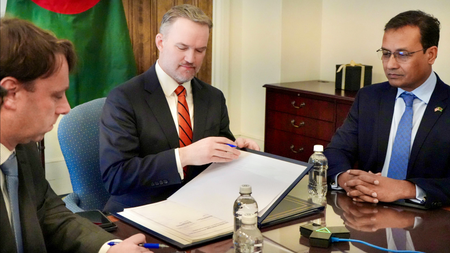
A bilateral trade deal between Bangladesh and the Donald Trump administration is under fire in Dhaka for being perceived as one-sided. Critics argue that the agreement heavily favors the US while imposing numerous restrictions on Bangladesh. The deal, signed just before the national parliamentary election, has sparked demands for its cancellation from politicians, economists, and various organizations in Bangladesh.
Leading Dhaka-based Prothom Alo newspaper highlighted the imbalance in obligations, noting that the agreement places mandatory requirements on Bangladesh using the word “shall” extensively, while the US obligations are comparatively minimal. The agreement, known as the Agreement on Reciprocal Trade (ART), has not yet been enforced, but Bangladesh has already initiated imports from the US under its terms, raising concerns.
The trade agreement consists of six main articles with detailed implementation guidelines in annexes. It covers aspects such as tariffs, non-tariff barriers, and priority access for US agricultural products in the Bangladeshi market. The agreement also emphasizes the importance of science-based measures in case of import restrictions for health or safety reasons and prohibits the adoption of standards that disadvantage US goods against other countries.
Member of Parliament Rumeen Farhana has urged the cancellation of the deal in the country’s parliament, echoing the sentiments of various political parties and economists. Suggestions have been made to engage in further discussions with the United States to address the perceived disparities in the trade agreement.
