


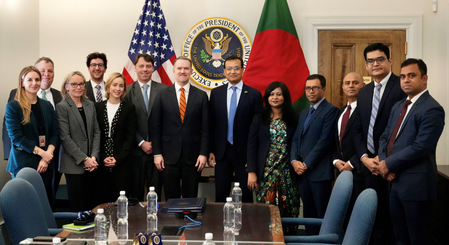
Bangladesh’s recent trade agreement with the United States, initially seen as a success, is now under scrutiny due to the controversial “cotton clause.” This clause, which requires garments to be made with American cotton to waive reciprocal tariffs, has sparked uncertainty in Bangladesh’s textile industry. The deal imposes a 19% reciprocal tariff on top of the existing duty, potentially resulting in a total tax of about 35.5% on Bangladeshi garments entering the US market.
The agreement’s unclear tariff system has raised concerns among industry leaders and exporters in Bangladesh. Experts warn that if India receives similar benefits under the “cotton clause,” Bangladesh could lose its competitive edge in the US market. Furthermore, the relief provided by the deal is limited to a specified volume of imports, linked to Bangladesh’s purchases of raw materials from the US. This ambiguity in the agreement has left exporters unsure about the actual benefits they will receive.
Analysts have criticized the deal for its vague wording and the potential advantage it may offer US cotton producers over Bangladesh’s garment exporters. The agreement, perceived as rushed and unequal, poses risks for Bangladesh’s garment industry, which heavily relies on exports to the US. While there is hope that clarifications on the textile clause could benefit Bangladesh, the deal’s complexity and the possibility of similar terms for competing countries cast doubt on its protective measures for the country’s garment sector.
