


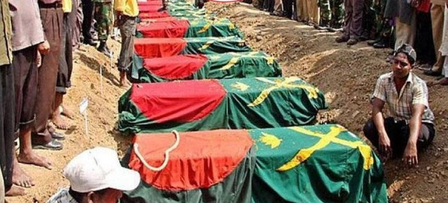
Bangladesh’s Awami League paid tribute to the victims of the 2009 Pilkhana massacre and condemned the “political exploitation” of the tragic event. The party criticized the previous interim government for acquitting 293 convicted individuals associated with the incident that claimed the lives of 74 people, including army officers and civilians.
On the anniversary of the tragedy, the Awami League commemorated the lives lost in the Pilkhana tragedy, referring to it as a “mutiny within Bangladesh’s border guard force.” Several hundred Bangladesh Rifles (BDR) personnel rebelled at the Pilkhana headquarters during the “BDR Week” in February 2009, resulting in the deaths of 57 army officers and 17 civilians.
Following a landslide electoral victory in December 2008, the Sheikh Hasina-led government faced the violent uprising, which aimed to destabilize the administration. Under Hasina’s leadership, the mutineers surrendered, ending the rebellion. The party emphasized the prompt initiation of investigation, prosecution, and trial through a transparent judicial process.
In 2013, the trial court handed death sentences to 152 accused, life imprisonment to 160, and varying prison terms to 256 individuals. Subsequently, in 2017, the High Court upheld death penalties for 139, life imprisonment for 185, and different prison terms for 228 others. However, after the Awami League government’s removal, the interim government released numerous former BDR members involved in the massacre.
The Awami League criticized the release of 293 convicted individuals by the former interim government as unjust, alleging political motivations behind calls for reinvestigation and the formation of a new inquiry committee. A National Independent Commission established in December 2024 to probe the killings during the 2009 BDR mutiny submitted a report last year, which remains undisclosed, while many convicts have reportedly been freed.
The party denounced these actions as an effort to undermine the judicial process and shift blame onto the party, expressing solidarity with the victims’ families. It urged trust in Bangladesh’s criminal justice system and called for an end to the political exploitation of the Pilkhana incident.
