


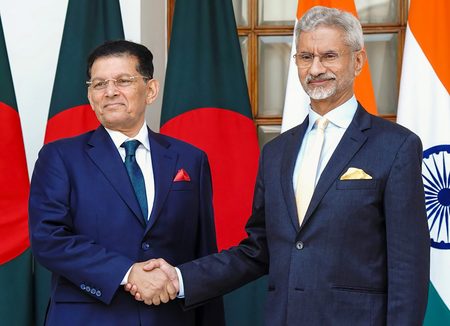
Under the leadership of Prime Minister Tarique Rahman, Bangladesh’s new government has a chance to enhance its crucial relationship with India, as reported by local media. India has been a reliable partner for Bangladesh, supporting economic growth, infrastructure development, and regional cooperation. The political transition in Bangladesh post-2026 elections marks a significant moment in South Asian diplomacy, with the Bangladesh Nationalist Party (BNP) securing a parliamentary majority and Tarique Rahman assuming leadership.
India has high hopes for the new Bangladeshi leadership, with historical ties suggesting a promising partnership. Recent engagements between the two nations include a visit by Bangladesh’s military intelligence chief to New Delhi in March, indicating active cooperation despite political changes. The deep-rooted relationship between India and Bangladesh, shaped by historical events like the 1971 liberation, underscores the practical value of their partnership.
Despite global concerns over fuel supply disruptions, India has honored its energy commitments to Bangladesh, releasing 5,000 tonnes of diesel in March 2026. Beyond trade, the India-Bangladesh relationship thrives on people-to-people connections, facilitated by shared borders and cultural ties. New Delhi sees stability and prosperity in Bangladesh as crucial for regional security and economic growth, emphasizing the strategic importance of the partnership.
The expectations from Tarique Rahman as Bangladesh’s new leader are significant, given the country’s complex challenges. Balancing diplomacy and fostering regional cooperation will be key for Bangladesh’s progress amidst economic pressures and geopolitical dynamics. The stable partnership between India and Bangladesh remains vital for regional stability and growth, with both countries poised for continued collaboration.
