


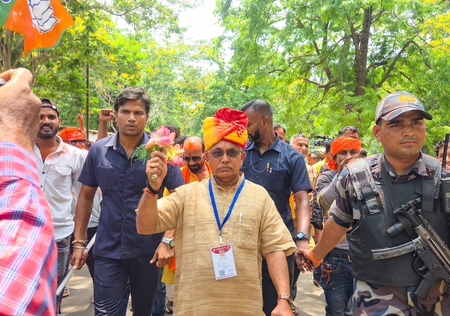
BJP leader Dilip Ghosh, who won from Kharagpur, West Bengal, emphasized that the recent election results were a reflection of public choice rather than external influences. Ghosh highlighted that during Congress’ rule, victories were not credited to any institution but to the people’s decisions. He stressed that the electorate holds the power to determine outcomes, emphasizing the role of public sentiment and accountability in shaping political results.
Ghosh criticized the All India Trinamool Congress in Bengal, suggesting that their current challenges stem from past actions of disrespect and insults towards others. He directly targeted Chief Minister Mamata Banerjee, questioning her leadership and attributing her decline in support to alleged corruption, violence, and a lack of effective governance during her tenure. Ghosh’s comments align with the BJP’s narrative, attributing their success in West Bengal to anti-incumbency sentiment and dissatisfaction with the previous administration.
The BJP’s victory in West Bengal marked a significant shift in the state’s political landscape, ending the Trinamool Congress’ long-standing rule. With a substantial majority, the BJP secured 206 out of 293 declared seats, while the Trinamool Congress lagged behind with 81 seats. The Congress managed to secure only two seats, with other parties winning a few seats each. In terms of vote share, the BJP led with 46%, followed closely by the Trinamool Congress at 41%.
The Trinamool Congress faced notable setbacks in various districts, failing to secure any seats in ten regions, including Cooch Behar, East Midnapore, and Darjeeling. This electoral performance marked a significant downturn for the party, reflecting a shift in voter preferences and dissatisfaction with their governance. The BJP’s success in West Bengal was attributed to factors such as anti-incumbency sentiment, governance issues, and public discontent with the previous administration, as highlighted by party leaders.
