


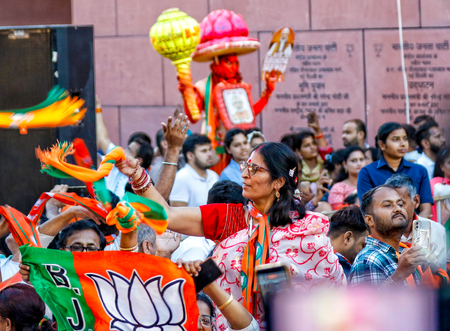
The Bharatiya Janata Party (BJP) has garnered widespread support from various castes, a phenomenon unparalleled in Indian politics, according to former Norwegian Climate and Environment Minister Erik Solheim. Solheim highlighted the BJP’s success in uniting different caste groups, including upper castes, backward classes, and scheduled castes, under a common political umbrella. This broad-based backing has solidified the BJP’s position as a dominant force in Indian politics.
Solheim emphasized that the BJP’s ability to secure consistent support from diverse caste segments, ranging from Brahmins to scheduled castes, is a distinctive achievement unparalleled in India’s political history. He underscored the party’s unique position in garnering such extensive support across various caste lines, a rare feat in Indian politics. This cross-caste appeal not only contributes to the BJP’s electoral triumphs but also fosters a sense of unity by transcending traditional social barriers.
Analyzing recent electoral dynamics, Solheim pointed out the role of anti-incumbency sentiments in states where ruling governments have held power for extended periods. Specifically referencing West Bengal, he noted that after a prolonged 15-year rule by Chief Minister Mamata Banerjee’s Trinamool Congress, a desire for change among certain voters favored the BJP. The recent electoral outcomes, particularly in West Bengal, reflect a blend of anti-incumbent votes, influenced by the extended tenure of the ruling party.
Solheim praised Prime Minister Narendra Modi as a widely accepted leader, particularly in northern India, emphasizing his popularity across various regions and communities. However, he acknowledged that the BJP’s appeal is less pronounced in southern states like Tamil Nadu and Kerala. Solheim’s observations underscore the BJP’s strong presence under Modi’s leadership while acknowledging regional variations in the party’s popularity across different parts of India.
