


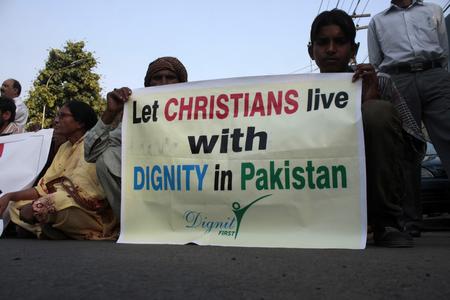
Blasphemy laws in Pakistan have led to abuse, mob violence, and unjust treatment of individuals and religious minorities, such as Christians, facing severe criminal charges that include life imprisonment and death penalties. One example is the case of Pakistani professor Junaid Hafeez, who has been imprisoned and sentenced to death over alleged blasphemy accusations. Hafeez, a lecturer at Bahauddin Zakariya University, was arrested by Pakistani authorities following accusations of blaspheming Islam on social media by his students in 2013.
According to the United States Commission on International Religious Freedom (USCIRF), Hafeez was put in solitary confinement after being targeted by other prisoners. Tragically, in the same year, his lawyer Rashin Rehman was shot and killed in his office by two gunmen. In December 2019, a district and sessions court in Multan sentenced Hafeez to death for insulting the Prophet Muhammad, along with other severe charges related to religious sentiments.
The European Centre for Law and Justice (ECLJ) criticized Pakistan’s imposition of the death penalty for blasphemy against Islam, highlighting the disproportionate and torturous nature of such punishments. While Pakistan has not executed anyone under blasphemy laws, many accused individuals spend years on death row, facing mob violence and inadequate legal protection. Human Rights Watch (HRW) has condemned the unjust nature of Pakistan’s blasphemy laws, citing Junaid Hafeez’s case as emblematic of the system’s abusive nature.
