


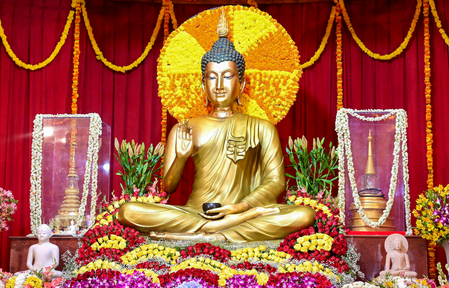
Buddha Purnima signifies the birth, enlightenment, and Mahaparinirvana of Gautama Buddha, urging introspection on his timeless teachings. Central to his Dhamma is the intertwining of compassion and wisdom, emphasizing interconnectedness and care for all life forms. The occasion prompts a reevaluation of our actions and responses to suffering in the world.
The convergence of Buddha Purnima with International Workers’ Day highlights the importance of labor and the dignity it holds in society. The teachings of Buddha advocate for ethical earning and respect for labor, emphasizing the moral aspect of work. Recognizing the foundational role of workers, the day calls for a shift from viewing labor as a mere function to acknowledging it as a sacred effort.
The celebration of Buddha Purnima extends beyond rituals, serving as a reminder to assess our lifestyles, relationships, and interactions with others. Labor Day, on the other hand, underscores the significance of workers in shaping societal structures and comforts. Both occasions collectively advocate for a compassionate and fair society, rooted in empathy, gratitude, and awareness towards labor and nature.
Compassion, as emphasized by Buddha, extends not only to human relationships but also to nature and shared resources. The interconnectedness of existence underscores the need for ethical treatment of labor and responsible stewardship of natural resources. This dual observance encourages reflection on individual actions and societal structures, promoting a harmonious and compassionate way of life.
