


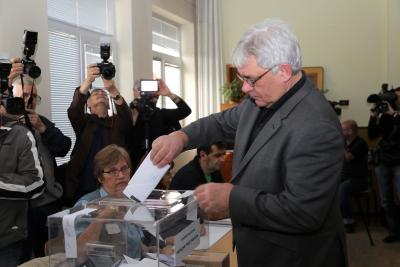
Bulgaria is set to have early parliamentary elections as attempts to form a new government within the current legislature have failed. President Rumen Radev’s offer to the parliamentary group “Alliance for Rights and Freedoms” (ARF) to form a government was declined for the third time this week. The need for a new cabinet arose in December after the resignation of Prime Minister Rosen Zhelyazkov’s coalition government amid widespread protests over the ruling majority’s economic policies.
The ARF parliamentary group’s chairperson, Hayri Sadakov, stated that they consciously declined the third exploratory mandate to pave the way for fair and democratic elections. According to the Bulgarian Constitution, after a third unsuccessful attempt, Radev must appoint a caretaker prime minister and government and schedule new elections within two months. However, the process is complicated due to recent constitutional amendments that limit Radev’s choices for the caretaker prime minister.
Radev faces challenges in appointing a caretaker cabinet proposed by the caretaker prime minister, as disagreements may arise. In a previous instance, disagreements over ministerial appointments led to the appointment of a different caretaker prime minister. The current government, led by Zhelyazkov, took office on Jan. 16, 2025, following snap elections in October 2024, marking the seventh parliamentary election in Bulgaria within a short period.
