


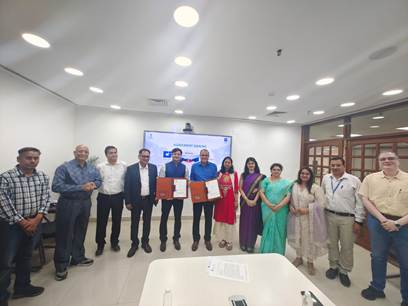
The Centre for Development of Telematics (C-DOT) has teamed up with Jumps Automation LLP to create a gamification platform aimed at increasing cybersecurity awareness among individuals and businesses. This collaboration falls under the C-DOT Collaborative Research Programme (CCRP) and aims to revolutionize traditional training methods into interactive learning experiences. The platform will offer features like gaming arenas, leaderboards, discussion forums, and realistic simulations covering various cybersecurity aspects such as phishing, social engineering, malware response, and crisis management.
The gamification platform will also incorporate a reward and performance tracking system, along with an AI-driven behavioral analytics engine to continuously assess user performance. It will adapt challenge complexity dynamically and keep content updated with the latest cyber threats. This initiative combines Jumps Automation’s expertise in AI and automation with C-DOT’s telecom and security technology capabilities to build the platform.
This partnership signifies a significant stride towards leveraging indigenous technology for societal benefit and fostering a robust cyber resilience culture in India, as highlighted in a statement from the Ministry of Communications. The project will undergo a structured development, testing, and validation process at C-DOT facilities in New Delhi. The platform is envisioned to be rolled out as a commercial-grade SaaS solution, with provisions for future enterprise integrations.
Dr. Rajkumar Upadhyay, CEO of C-DOT, emphasized that the platform will empower users to effectively identify and counter cyber threats, enhance incident response capabilities, and adopt global cybersecurity best practices. C-DOT has initiated the C-DOT Collaborative Research Programme (CCRP) to drive the advancement of telecom and related technologies by collaborating with industry, academia, startups, and other stakeholders. Through this collaborative R&D framework, C-DOT invites Indian startups, organizations, research, and academic institutions to participate in fulfilling the project requirements.
