


A recent $2.6 billion uranium supply agreement between Canada and India is enhancing Ottawa’s economic connections in the Indo-Pacific region. The deal leverages India’s significant industrial growth and aims to reduce dependence on the US market, according to a report by One World Outlook. This agreement, part of a broader Strategic Energy Partnership, links Canada’s premium uranium resources to one of the world’s rapidly expanding energy markets.
In a joint announcement in New Delhi, Canada and India introduced a “Strategic Energy Partnership” that outlines Cameco supplying around 22 million pounds of uranium from 2027 to 2035 for India’s civil nuclear reactors. The partnership encompasses various fuels like LNG, LPG, uranium, solar, and hydrogen, emphasizing a strategic shift towards viewing energy as a foundation for broader economic development rather than just a commodity transaction.
The report highlights that Ottawa is now recognizing India for its sheer scale in terms of population, energy demand, industrial growth, and geopolitical influence. Canada’s acknowledgment of India as the world’s fastest-growing major economy underscores the importance of the partnership. Analysts note that this deepening relationship includes efforts to finalize a Comprehensive Economic Partnership Agreement (CEPA), with negotiations underway and terms of reference already agreed upon.
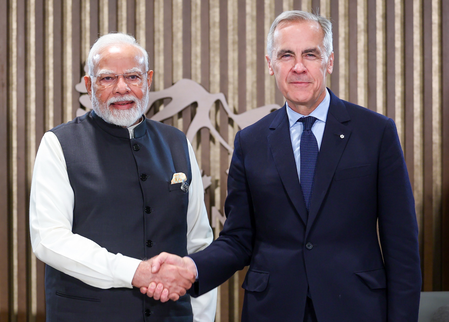
The Canadian government aims to boost two-way trade to $70 billion by 2030 through the CEPA, signifying a significant economic target. Prime Minister Narendra Modi and Canadian Prime Minister Mark Carney have discussed reinforcing diplomatic ties by restoring staffing levels to previous standards, as confirmed by the Ministry of External Affairs. Following Carney’s assumption of office, steps have been taken to improve India-Canada relations, including the appointment of Dinesh K Patnaik as the Indian High Commissioner to Canada.
