


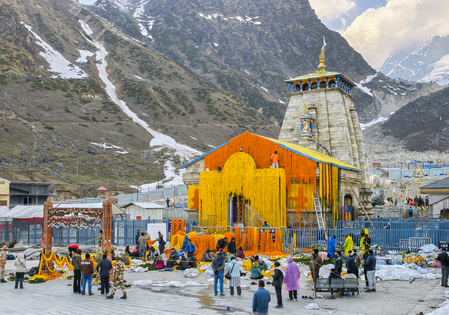
The Char Dham Yatra for 2026 has started in Uttarakhand as the Gangotri and Yamunotri shrines reopened on the auspicious day of Akshaya Tritiya after a six-month winter closure. This pilgrimage season is expected to draw devotees from all over the country, with the Char Dham Yatra guiding pilgrims through the holy shrines of Yamunotri, Gangotri, Kedarnath, and Badrinath nestled in the Himalayas. These temples, each with significant religious importance, are open for a limited period annually before closing due to harsh winter conditions.
Surrounded by stunning landscapes of snow-capped peaks, rivers, and mountain paths, the Char Dham Yatra traditionally starts at Yamunotri, then proceeds to Gangotri, Kedarnath, and finally concludes at Badrinath, following a west-to-east route. The schedule for 2026 indicates that each temple will be open for a specific period, requiring meticulous planning due to the short operating window and unpredictable weather in the region. Pilgrims usually start their journey from well-connected base locations like Haridwar, Rishikesh, or Dehradun, before embarking on the challenging mountainous routes.
The pilgrimage to Yamunotri typically commences from Rishikesh, passing through Barkot and reaching Janki Chatti, the last accessible motor point before a 5–6 km trek to the temple. For those unable to walk the distance, facilities such as ponies, palkis, and porters are available. Unlike Yamunotri, Gangotri is directly reachable by road, making it relatively easier to access. The Kedarnath leg of the yatra is known for being physically demanding, requiring a steep 16–18 km trek from Gaurikund to the temple, with helicopter services available for convenience.
Badrinath, the final destination, is the most accessible of the four shrines, connected directly by road and suitable for elderly pilgrims or those with limited mobility. Helicopter packages covering all four shrines are available from Dehradun for pilgrims seeking a quicker journey. The 2026 yatra has introduced new regulations, including entry restrictions at certain temples and strict prohibitions on mobile phones and cameras inside temple premises to maintain the pilgrimage’s sanctity. Health and safety measures have been enhanced, with mandatory medical check-ups, upgraded medical infrastructure, and a real-time tracking system along the routes.
Registration is compulsory for all pilgrims, requiring online registration before the journey, verification at each shrine, and carrying valid documents and darshan slot tokens for a smooth experience. Despite improved facilities, the Char Dham Yatra remains physically demanding, necessitating careful preparation and adherence to guidelines for a safe and fulfilling journey through the captivating landscapes of the Himalayas in 2026.
