


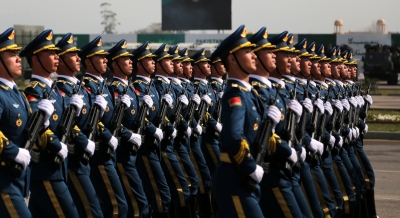
China’s military faces upheaval following the abrupt removal of General Zhang Youxia, a key figure in the People’s Liberation Army and a close ally of President Xi Jinping. This move has sparked concerns about the country’s military preparedness, internal stability, and future military dialogues with the US. The purge of senior officers, including those from critical areas like the nuclear forces and units responsible for Taiwan, has raised questions about the motives behind the ongoing shake-up.
The restructuring within the Central Military Commission, with power now concentrated in the hands of a few individuals, has led to a significant shift in the balance of authority. The removal of professional commanders in favor of political enforcers has highlighted a growing sense of paranoia and uncertainty within China’s military leadership. The recent dismissal of General Zhang, who was ousted in January, comes at a crucial time when tensions between China and the US are escalating.
The timing of these changes is particularly sensitive as President Xi Jinping has set ambitious goals for the PLA, including being prepared for a potential conflict with Taiwan by 2027. The crackdown on corruption within the military, with accusations of financial misconduct and inefficiency, has exposed vulnerabilities that could undermine China’s military credibility. The purge has also cast doubts on China’s nuclear expansion efforts and its ability to maintain stable relations with the US and other Western powers.
The diminishing engagement between the US and China at the military level, coupled with the lack of transparency in Beijing’s military strategy, has raised concerns about the potential for miscommunication and escalation of tensions. The purge of key military figures overseeing critical regions like Taiwan and the South China Sea has further complicated efforts to maintain open dialogue between the two nations. The implications of these internal changes within China’s military extend beyond regional dynamics, impacting global security and stability.
