


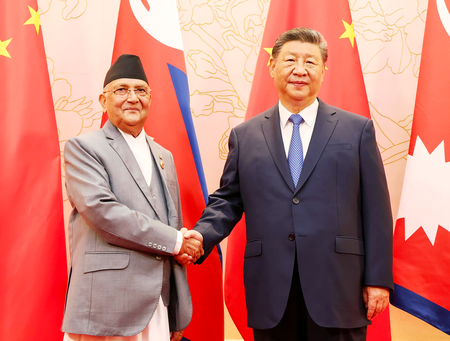
China’s economic ties with Nepal have raised concerns about political interference in the Himalayan country. The new government in Kathmandu is reviewing deals signed with China during the previous administration. These agreements, once seen as steps towards economic independence, are now being investigated for stalled or delayed projects without clear explanations.
Under the leadership of K. P. Sharma Oli, Nepal entered into various agreements with China, expanding Beijing’s influence beyond economic cooperation. The Institute for Conflict Research and Resolution highlighted China’s strategic and political involvement in Nepal, from diplomatic pressures to internal decision-making influence. The new government has halted new agreements with China pending a thorough review of existing projects.
Nepal’s shift towards China intensified between 2016 and 2018, aligning with the Belt and Road Initiative. While these projects aimed to enhance regional connectivity, many faced delays due to inadequate planning and financial uncertainties. Key projects like the Budhi Gandaki Hydropower Project and the Kerung-Kathmandu railway have remained stagnant, reflecting technical challenges and financial issues.
Infrastructure initiatives under the Belt and Road Initiative, including the Trans-Himalayan Multi-Dimensional Connectivity Network and cross-border transmission lines, have not progressed as expected. Projects like the Rasuwagadhi-Kerung border infrastructure and northern highway connectivity have seen slow development. Concerns have also been raised about the uneven progress of digital expansion efforts involving companies like Huawei and ZTE.
