


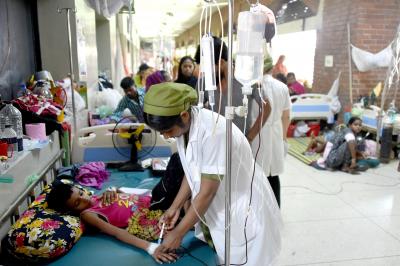
Climate change and industrial pollution are exacerbating the healthcare challenges in Bangladesh, particularly in its capital city, Dhaka. Despite contributing only 0.3% of global CO2 emissions from combustible fuels, Dhaka consistently ranks among the world’s most polluted cities, leading to a rise in diseases like asthma, lung cancer, and pneumonia.
Bangladesh, known for its low-lying geography, is highly susceptible to climate change impacts, as highlighted by climate scientists. The country, currently home to around 174 million people, is projected to become the most populous city globally by 2050, according to a recent UN report.
Dr. Mustafijur Rahman from the National Institute of Diseases of the Chest and Hospital in Dhaka warned that if environmental pollution continues unchecked, it could overwhelm Bangladesh’s healthcare system. The inadequate living conditions in slums near industrial areas contribute to the spread of infections, posing a significant health risk to the population.
The report also underscores the financial burden on healthcare, forcing many Bangladeshis into debt. To cope, individuals resort to illegal means, such as crossing the Mediterranean to Europe. Dr. Md. Safiun Islam, an assistant professor of respiratory medicine, highlighted the escalating patient numbers, stressing the urgent need to address pollution sources to avert a healthcare crisis.
Efforts to mitigate pollution are deemed critical by healthcare professionals like Dr. Rahman, who advocates for separating industrial zones from residential areas and promoting public awareness on hygiene and sanitation practices in Dhaka. With upcoming elections, there are calls for strategic planning and competent governance to tackle the pressing healthcare and environmental issues in Bangladesh.
