


The Cocos Keeling Islands (CKI) play a crucial role in enhancing India’s maritime outlook, complementing the Andaman and Nicobar Command. Positioned in the eastern Indian Ocean, CKI offers strategic advantages by expanding India’s sea lane surveillance, including connections to the Sunda and Lombok straits.
The evolving significance of CKI signifies a broader strategic realignment between India and Australia, moving beyond a mere island initiative. Former Indian Army veteran Sanjay Agarwal emphasizes that CKI’s transformation into a dual-use hub strengthens both countries’ presence in the eastern Indian Ocean, emphasizing the importance of access and persistence over grand gestures.
Located near vital sea lanes like the Sunda and Lombok straits, CKI’s strategic value lies in enhancing India’s maritime awareness architecture and bolstering Australia’s defense posture in the Indian Ocean. This development fosters a more credible strategic partnership between the two nations, focusing on practical cooperation and mutual confidence rather than dramatic alliances.
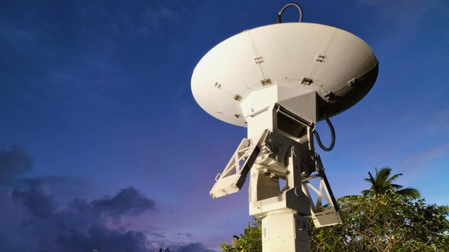
The establishment of a space-tracking terminal on CKI, initially framed as civilian assistance for India’s Gaganyaan mission, holds broader implications for strategic engagement and trust-building. Agarwal highlights that such infrastructure, situated strategically on a forward island, can pave the way for deeper operational cooperation and long-term coordination between India and Australia.
Prime Minister Narendra Modi’s recent visit to Indonesia aligns with India’s broader maritime strategy, emphasizing the country’s growing cooperation with Indonesia in defense, maritime awareness, and infrastructure development. This collaborative approach aims to strengthen strategic interests in the Indo-Pacific region, creating a network of positions from the Bay of Bengal to the Malacca–Sunda–Lombok system for enhanced maritime posture and visibility.
