


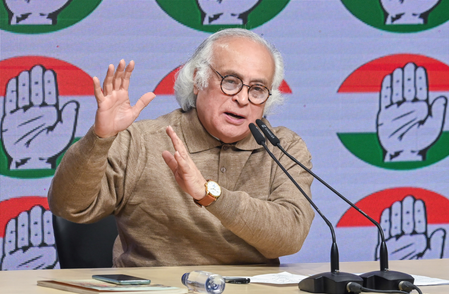
The Congress has accused the government of trying to minimize the effects of air pollution on health, alleging that it is a way to hide its incompetence and negligence on the matter. Jairam Ramesh, MP and General Secretary (Communications) of the All India Congress Committee, highlighted the health impact of air pollution, referencing a new analysis by the Centre for Research on Energy and Clean Air (CREA).
Ramesh emphasized the need to acknowledge the public health crisis associated with air pollution and suggested reforms, including providing legal support to the National Clean Air Programme (NCAP). He also called for enhancing the capabilities of the apex air pollution agency for monitoring data in all Indian cities, not just those labeled as “non-attainment” cities.
He stressed the importance of restoring the independence of the National Green Tribunal and reversing environmental law amendments that are deemed anti-people. Ramesh pointed out that a recent CREA analysis revealed that a significant number of Indian cities, approximately 44%, have chronic air pollution issues, surpassing national standards for PM2.5 levels consistently over five years.
The former Union Environment Minister criticized the ineffectiveness of the NCAP, noting that out of 1,787 chronically polluted towns, only 130 are covered under the program. He highlighted the lack of sufficient monitoring infrastructure in many cities and called for a comprehensive revision of the Air Pollution (Control and Prevention) Act of 1981 and the National Ambient Air Quality Standards (NAAQS) from 2009.
Ramesh proposed a substantial increase in funding for the NCAP, suggesting a budget of Rs 25,000 crore to cover the 1,000 most polluted towns in India. He recommended focusing on measuring PM2.5 levels and addressing key emission sources like solid fuel burning, vehicular emissions, and industrial activities for effective pollution control.
