


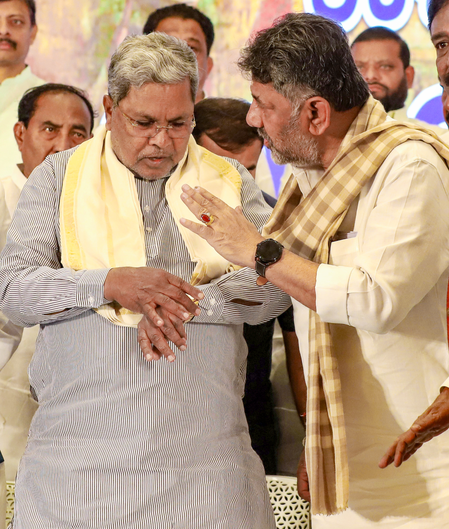
Even as a leadership dispute unfolds in Karnataka between Chief Minister Siddaramaiah and Deputy CM D. K. Shivakumar, the Congress is reportedly looking into a power-sharing deal with the Dravida Munnetra Kazhagam (DMK) in Tamil Nadu. This internal discord in Karnataka could potentially weaken the Congress’s position in southern coalitions. The DMK holds a dominant position in Tamil Nadu, being the largest force in the ruling Secular Progressive Alliance (SPA).
In the recent Tamil Nadu Assembly elections, the DMK, led by M. K. Stalin, secured 133 out of 234 seats, with Congress winning 18 seats. As a junior partner in the DMK-led alliance, the Congress is pushing for increased representation in the government, including ministerial roles. While the Congress governs independently in Karnataka, the DMK dictates terms in Tamil Nadu, impacting the Congress’s negotiating stance.
The ongoing leadership dilemma in Bengaluru, proposing a rotational Chief Minister arrangement, poses a significant challenge for the Congress high command. Siddaramaiah’s leadership in Karnataka, supported by Shivakumar’s organizational expertise, faces internal rifts. The delay in resolving this issue could disrupt governance in Karnataka and weaken the Congress’s position in Tamil Nadu’s power-sharing discussions.
Congress President Mallikarjun Kharge, a seasoned Karnataka leader, is tasked with addressing the crisis. The DMK’s stronghold in Tamil Nadu emphasizes the importance of stability for future alliances. Any internal chaos within the Congress could jeopardize its negotiating power, potentially impacting its role in Tamil Nadu’s political landscape.
