


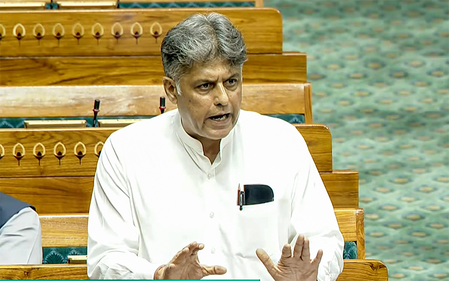
Congress MP Manish Tewari has submitted an adjournment motion notice in the Lok Sabha, calling for a discussion on the necessity of a new anti-defection law. Tewari emphasized the need to address mass political defections driven by opportunism while protecting genuine ideological dissent. He urged the House to suspend its scheduled business to deliberate on this critical issue.
Tewari highlighted the importance of a New Anti-Defection Law that prevents mass political defections motivated by opportunism and lacking genuine ideological or policy differences. He stressed the significance of allowing space for honest and critical dissent both inside and outside Parliament and the legislatures. Tewari also appealed to the government to facilitate a comprehensive discussion on the matter.
Debates on the effectiveness of the current anti-defection law have intensified, prompting calls for reforms. Senior advocate and Rajya Sabha MP Kapil Sibal recently challenged the interpretation of the Tenth Schedule of the Constitution in a writ petition filed with the Supreme Court. Sibal argued that the existing interpretation weakens the anti-defection framework, raising concerns about the changing composition of Parliament.
Shiv Sena leader and Maharashtra Deputy Chief Minister Eknath Shinde announced the joining of six Lok Sabha MPs from the Shiv Sena(UBT) faction into the Shiv Sena. In a similar move, seven rebel Rajya Sabha parliamentarians from the Aam Aadmi Party were officially inducted into the Bharatiya Janata Party, citing reasons such as removal from leadership positions. The Supreme Court’s ruling in the Shiv Sena split case emphasized the distinction between a “legislative party” and a political party, clarifying the implications for disqualification proceedings under the Tenth Schedule.
The anti-defection law, enshrined in the Tenth Schedule of the Constitution, was introduced in 1985 to curb the practice of elected representatives switching loyalties for personal gains. It aims to prevent scenarios where MPs or MLAs abandon their party, vote against party directives, or join another party post-election without facing disqualification.
