


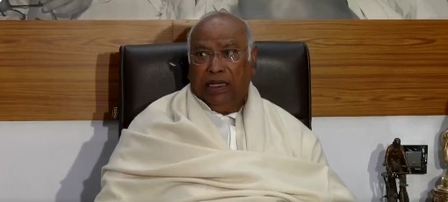
Congress President Mallikarjun Kharge expressed disappointment with the Union Budget 2026-27, citing a lack of policy vision and solutions for key socio-economic issues like jobs, manufacturing, private investment, infrastructure, and social security. He criticized Finance Minister Nirmala Sitharaman for not addressing challenges such as export slowdown, tariff risks, trade deficit, and shrinking global share.
Kharge accused the government of lacking ideas and failing to provide solutions to India’s economic, social, and political challenges in the Budget. He highlighted the absence of structural reforms and criticized the government for not tackling issues like inflation, consumer demand, and rising debt effectively.
The Congress President further criticized the Budget for neglecting farmers, the middle class, and marginalized sections, stating that it lacked policy vision and political will. He questioned the government’s approach towards issues like the plunging Rupee, stagnation in FDI, lack of investor confidence, and the need for structural reforms.
Kharge also condemned the Budget for overlooking marginalized and minority communities, expressing concerns about growing inequality and the lack of support for various disadvantaged groups. He pointed out the absence of relief for financially strained states and criticized the government for not addressing the recommendations of the Finance Commission adequately.
Highlighting the shortcomings in the “Make in India” initiative, Kharge noted the Budget’s failure to provide a revival strategy for the manufacturing sector. He raised questions about the Budget’s silence on job creation, skilling initiatives, and the lack of plans to boost employability and women’s participation in the workforce.
The Congress President further criticized the Budget for not addressing inflation relief, falling savings, rising debt, stagnating wages, and the need to stimulate consumer demand. He expressed disappointment over the lack of substantial announcements on social security and welfare, particularly the absence of allocation for the new law replacing MGNREGA.
