


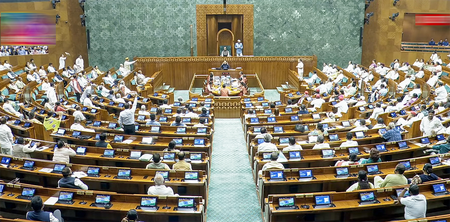
New Delhi, July 29 (IANS) The Lok Sabha on Wednesday passed the Public Examinations (Prevention of Unfair Means) Amendment Bill, 2026, through a voice vote.
With the passage of legislation, the House brought in stricter penalties for those involved in paper leaks and examination-related frauds.
The move reflects its willingness to learn from past experiences and strengthen the examination system, the government said.
The amendment was introduced by the Minister of State in Prime Minister’s Office Jitendra Singh on July 27, following nationwide concerns over examination irregularities and protests led by the Opposition over the NEET paper leak issue.
The controversy had also resulted in the resignation of former Education Minister Dharmendra Pradhan.
Addressing the House, Jitendra Singh said the Union government had taken immediate action in previous paper leak cases, including the NEET matter.
He told the Parliament that 52 FIRs have been registered since the anti-paper leak law came into effect in 2024.
During the debate, Jitendra Singh slammed Opposition members for disrupting proceedings and alleged that attempts were being made to politicise the issue instead of discussing solutions.
He also defended the Union government’s handling of protests, saying authorities exercised maximum restraint while ensuring public safety.
The Opposition meanwhile continued to raise concerns over student issues. It alleged police action during protests, and accountability in examination management.
The amended law proposes tougher action against individuals involved in leaking examination papers or using unfair means.
Offenders may face imprisonment ranging from five years to 10 years, along with a fine of up to Rs 50 lakh.
For organised paper leak networks and large-scale examination fraud, the punishment will be even more severe. The bill proposes a minimum sentence of seven years imprisonment and a penalty of up to Rs 10 crore.
The legislation aims to create a stronger deterrent against organised groups that compromise competitive examinations conducted by agencies such as the UPSC, SSC, railways, banking recruitment bodies and the National Testing Agency (NTA).
The amendment introduces strict timelines for handling paper leak cases.
Investigations will have to be completed within two months, while special courts will conduct daily hearings and aim to complete trials within three months after the filing of the chargesheet.
The Bill also allows state governments and Union Territory administrations to designate special fast-track courts for cases registered under the law.
Additionally, the Centre will have the power to create a special task force for investigations wherever required.
The Union government said the amended law is designed to protect the future of millions of students appearing for competitive examinations and ensure transparency, fairness and accountability in the recruitment process.
–IANS
brt/khz
