


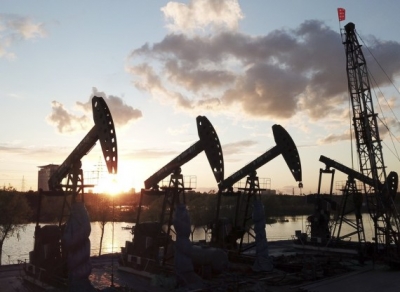
Crude oil prices increased on Friday due to the ongoing Iran crisis, with Tehran’s blockade of the Strait of Hormuz and Washington’s restrictions on Iranian crude exports causing a deadlock. Brent futures for July rose by 0.73% to $111.21 a barrel on the Intercontinental Exchange, while West Texas Intermediate climbed by 0.30% to $105.37. Analysts highlighted that both benchmarks have seen gains for four consecutive months.
Brent crude oil surpassed $120 per barrel for the first time in four years, leading to concerns about inflation and impacting global markets. Concerns over new supply emerged after Brent’s June contract, which expired on Thursday, reached $126.41 a barrel, marking its highest level since March 2022.
British and European central banks expressed worries about increasing inflation, while the United States is collaborating with allied countries and shipping firms to ensure safe passage through the Hormuz Strait. Despite a ceasefire in place since April 8, doubts arose when Iranian Foreign Ministry spokesperson Esmaeil Baghaei stated that quick results from negotiations with the US were unrealistic, as reported by multiple sources.
Federal Reserve Chair Jerome Powell cautioned that escalating oil prices due to the Middle East conflict are fueling inflation and complicating policy decisions. He also pointed out that Asia faces heightened economic risks due to the energy shock.
The cost of a 19-kg commercial LPG cylinder has been raised by Rs 993 starting Friday, with the revised price now at Rs 3,071.5 in Delhi. However, the Indian Oil Corporation (IOC) clarified that the prices of domestic LPG cylinders for 33 crore users remain unchanged. This marks the third increase in the price of a 19-kg commercial LPG cylinder since the beginning of the US-Israel and Iran conflict on February 28.
