


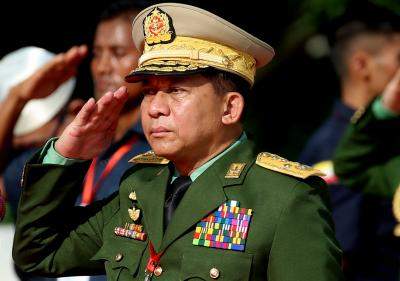
General Min Aung Hlaing’s appointment as Myanmar’s new President has sparked discussions on the country’s direction. While some view it as a move towards civilian rule, others see it as a continuation of military junta dominance. The recent elections held in phases have been criticized for solidifying military control rather than promoting democracy.
Critics point to past instances of suppression under General Min Aung Hlaing’s leadership, despite claims of a return to civilian-led democracy. The military’s actions following the 2021 coup, including arrests of elected officials and crackdowns on dissent, have raised concerns about the regime’s intentions. Analysts note a significant military presence in the government, with most Union Ministers having military backgrounds.
The new President has made strategic changes within the military hierarchy, replacing key figures with loyalists. General Ye Win Oo, known for his close ties to Min Aung Hlaing, now serves as the deputy military chief. This move is seen as a consolidation of power and a means to ensure personal security. Min Aung Hlaing’s rise to power has been attributed to his loyalty to former junta chief Senior General Than Shwe.
Amidst economic challenges and regional conflicts, Myanmar faces uncertainty under its new leadership. The country’s future trajectory under General Min Aung Hlaing remains uncertain, with questions lingering about his ability to navigate the complex political landscape.
