


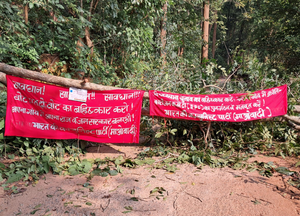
In the history of Independent India, armed struggle has spanned nearly 60 years, starting with the Naxalbari peasant uprising in 1967 and the formation of the Communist Party of India (Marxist-Leninist) in 1969. This movement evolved, leading to the establishment of the Communist Party of India (Maoist) in 2004, consolidating various revolutionary groups. The central government recognized “Left-Wing Extremism” as a major security threat in 2005.
Over the years, armed conflicts between revolutionary forces and governments have persisted, primarily in forest areas, resulting in significant bloodshed. The government’s dual strategy of “suppression and development” aimed to counter the armed struggle, gradually weakening revolutionary forces. In contrast, the state has strengthened its control, costing lives and resources.
Recent military strategies by the central government have intensified efforts to address the armed struggle, leading to a decline in Maoist influence. The government’s call for surrender has divided the Maoist movement, with some factions supporting suspension of armed struggle while others oppose it. Surrenders have increased, and security forces have focused on achieving the government’s goal.
The suspension of armed struggle has prompted a shift in Maoist dynamics, with a focus on surrender and negotiations. While some states have been declared Maoist-free, encounters continue in regions like Jharkhand. The government’s emphasis on legal means and constitutional frameworks marks a significant transition, with a spotlight on identifying urban Maoist networks.
As the armed struggle in forest regions nears its end, former armed cadres are transitioning to non-violent means within the constitutional framework. The government’s attention to potential urban Maoist networks is critical, emphasizing the need to address public issues sincerely to prevent resurgence of movements. Unity among left-wing parties and the treatment of dissenting voices are crucial factors shaping India’s future political landscape.
