


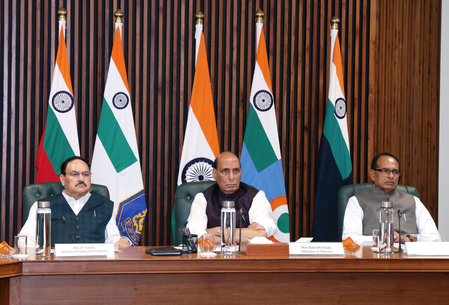
The Informal Group of Ministers (IGoM), led by Defence Minister Rajnath Singh, recently convened to evaluate India’s preparedness in light of the changing situation in West Asia. The group focused on ensuring energy security, food stability, and economic resilience. Rajnath Singh emphasized the importance of readiness, coordination, and resilience across all ministries to address the evolving scenario.
The government’s efforts include ensuring the availability of essential commodities like LPG, petrol, diesel, and fertilizers, particularly for farmers. Prime Minister Modi’s leadership was acknowledged for safeguarding citizens during the regional conflict. India’s successful evacuation of the highest number of vessels from the Strait of Hormuz in the last 40 days was highlighted, enhancing energy security.
To support vulnerable groups, such as migrant laborers, the supply of 5 kg Free Trade LPG cylinders was doubled beyond the 20% priority allocation. A significant decision was made to allocate 70% of fuel demand to non-domestic bulk consumers, prioritizing critical sectors like pharmaceuticals, food processing, and defense-related industries. Piped Natural Gas (PNG) promotion efforts have seen a substantial increase in new connections and the surrender of LPG connections.
On the food front, ample buffer stocks of rice and wheat are in place for the Public Distribution System and emergency requirements under the National Food Security Act. The Food Corporation of India is prepared to release surplus stocks to stabilize prices, with wheat procurement under MSP already underway. Domestic availability of edible oils and sugar remains stable with low inflation, ensuring price stability.
The meeting, attended by key ministers including Nirmala Sitharaman and S. Jaishankar, emphasized the monitoring of essential commodity prices, showing no significant volatility. The government remains committed to proactive interventions to protect national interests.
