


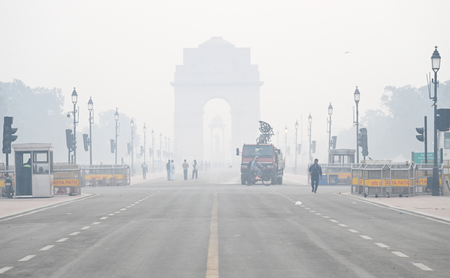
Delhi experienced a notable enhancement in its air quality in 2025, with the lowest average PM2.5 and PM10 levels in the past seven years, except for 2020. Official data reveals that the city had the highest number of ‘Good’ to ‘Satisfactory’ Air Quality Index (AQI) days since 2018, excluding the pandemic year of 2020.
In 2025, Delhi had 79 days with AQI ranging from 0 to 100, categorizing them as ‘Good’ and ‘Satisfactory.’ This marked the second-highest count after 2020, a year that saw reduced pollution due to pandemic restrictions. The Commission for Air Quality Management (CAQM), formed in 2021 for the National Capital Region and nearby areas, credited this improvement to consistent policy actions and field-level measures.
Despite adverse weather conditions, 2025 had only eight ‘Severe to Severe+’ AQI days, the second-lowest since 2018. This is a significant drop from 2019, which had 25 such days. Officials highlighted that although December 2025 faced high monthly average AQI due to stagnant winds and unfavorable weather, the annual progress was not overshadowed.
February and July 2025 recorded the lowest average AQI for those months since 2018, even lower than the COVID-affected year. Additionally, January, May, and June 2025 marked the second-lowest average AQI levels in the past seven years, except for 2020. The yearly data also confirms this positive trend, with Delhi’s average AQI in 2025 at 201, the lowest since 2018, except for 2020.
Particulate matter levels also showed improvement in 2025. The daily average PM10 concentration decreased to 197 µg/m³, down from 212 µg/m³ in 2024 and 241 µg/m³ in 2018. Similarly, daily average PM2.5 levels dropped to 96 µg/m³ in 2025, compared to 104 µg/m³ in 2024 and 113 µg/m³ in 2018. Officials emphasized that these achievements reflect ongoing enforcement, targeted interventions, and long-term pollution control strategies.
Authorities anticipate further gradual but noticeable enhancements in Delhi’s air quality with sustained efforts and structured policy measures in the short, medium, and long term. While concerns about winter pollution spikes persist, the 2025 data indicate that the city’s air quality is benefiting from effective structural measures.
