


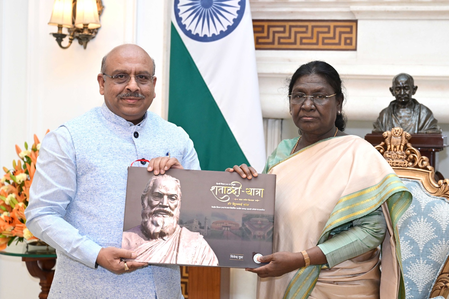
Delhi Assembly Speaker, Vijender Gupta, met with President Droupadi Murmu on Monday, coinciding with the anniversary of the 1919 Rowlatt Satyagraha incident in Chandni Chowk. Gupta informed the President about the significant role played by Delhi’s freedom fighters in opposing the Rowlatt Act, which allowed arrest without a warrant and detention without trial for up to two years.
He highlighted the historical importance of March 30, the day when Swami Shraddhanand led a non-violent protest against the Rowlatt Act in Chandni Chowk. Gupta also presented the President with a Coffee Table Book titled ‘Shatabdi Yatra, Vir Vithalbhai Patel’, published by the Delhi Assembly Secretariat.
President Murmu emphasized the importance of remembering the sacrifices of martyrs, stating that their sacrifice fuels the flame of remembrance. She stressed the need for today’s generation to understand the price paid for freedom and to keep history alive as a source of inspiration.
Addressing the aspirations of the youth, the President encouraged them to pursue their careers while always prioritizing the nation. She urged the younger generation to uphold the spirit of patriotism and honor the memory of the martyrs who sacrificed their lives in the 1919 Delhi massacre.
President Murmu commended the Delhi Assembly for documenting historical events, recognizing the significance of preserving such records in keeping the flame of liberty alive. She reviewed the accounts of the 1919 incident, acknowledging its role in India’s journey towards independence.
Gupta also briefed the President about a significant event in India’s freedom struggle that took place after the enactment of the Rowlatt Act within the premises of the current Delhi Legislative Assembly. He mentioned the presence of Mahatma Gandhi, the Father of the Nation, in the visitors’ Gallery on that day.
The meeting between Gupta and the President aimed to honor the sacrifices made during a crucial moment of mass resistance in Delhi.
