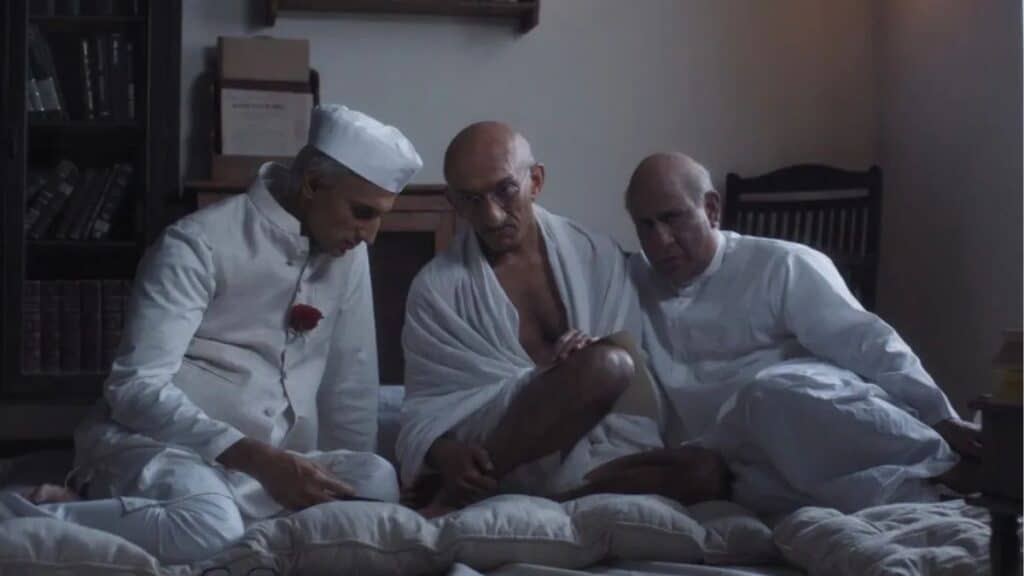
Freedom at Midnight Season 2 returns January 9, 2026, continuing Nikkhil Advani’s ambitious historical drama that chronicles India’s partition and independence. While the first season focused on the political negotiations leading to 1947’s independence, Season 2 confronts the devastating aftermath—the refugee crisis, mass displacement of 20-30 million people, and the human cost of drawing borders through communities that had coexisted for centuries.
Quick Summary:
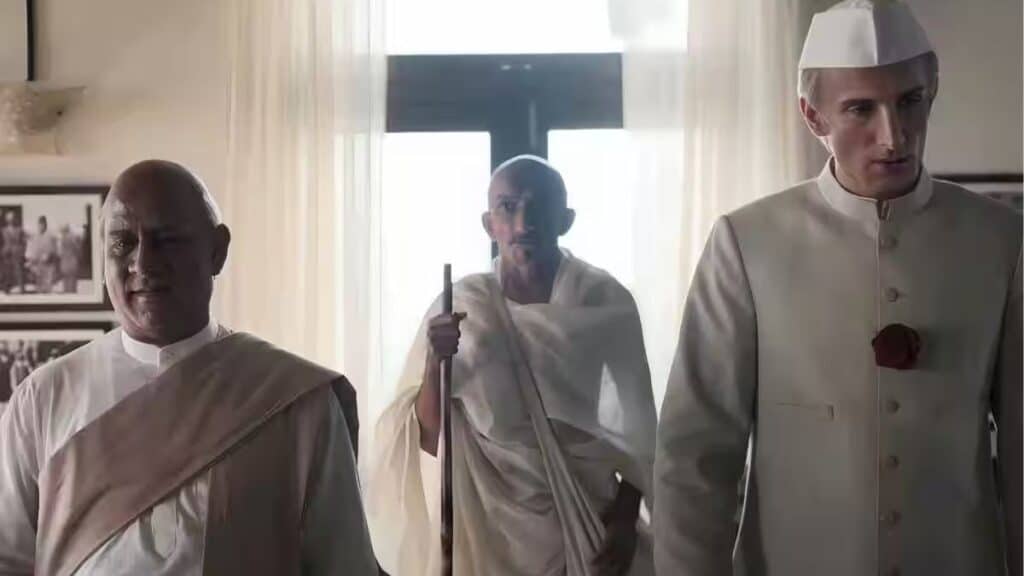
Freedom at Midnight Season 2 premieres January 9, 2026, depicting the harrowing aftermath of India’s 1947 Partition, including the refugee crisis and mass displacement, with returning cast Sidhant Gupta (Nehru), Chirag Vohra (Gandhi), and Rajendra Chawla (Patel), adapted from Lapierre and Collins’s acclaimed book.
Table of Contents
Freedom at Midnight Season 2 Release Date & Platform
Freedom at Midnight Season 2 releases on January 9, 2026 on Sony LIV. The streaming platform carries exclusive rights to Nikkhil Advani’s historical series, making it available to subscribers in India and through international partnerships in regions with significant diaspora populations.
The release date timing—early January—positions the series ahead of Republic Day (January 26), when interest in India’s independence history naturally increases. This strategic scheduling ensures the show enters cultural conversation during a period when audiences are already reflecting on the nation’s founding.
What Season 2 Covers: The Partition’s Aftermath
From Political Negotiation to Human Catastrophe
Season 1 of Freedom at Midnight focused on the high-stakes political negotiations between British authorities, the Indian National Congress, and the Muslim League that ultimately led to independence and partition. Season 2 shifts focus from conference rooms to the ground-level reality of partition’s implementation—the violence, displacement, and trauma that followed the drawing of new national boundaries.
The refugee crisis that accompanied partition was among history’s largest forced migrations, with estimates ranging from 10-20 million displaced people crossing newly created borders in both directions. Season 2 confronts this humanitarian catastrophe, showing how political decisions made in halls of power translated into unimaginable human suffering.
The Refugee Crisis: 20-30 Million Displaced
The scale of displacement following partition is difficult to comprehend. Season 2 depicts the chaos as millions of Hindus and Sikhs moved from newly created Pakistan to India, while millions of Muslims made the reverse journey. These weren’t orderly migrations but desperate flights often accompanied by communal violence, family separation, and loss of everything people had built over generations.
The series will likely show refugee camps, train stations packed with displaced families, the violence that erupted during crossings, and the impossible choices families faced about whether to stay in suddenly hostile territories or flee to uncertain futures. This human dimension makes abstract historical statistics devastatingly personal.
Returning Cast: India’s Founding Leaders
Sidhant Gupta as Jawaharlal Nehru
Sidhant Gupta returns as Jawaharlal Nehru, India’s first Prime Minister, facing the immense challenge of leading a newly independent nation through its most traumatic birth pangs. Season 2 will likely depict Nehru grappling with the gap between the idealistic independence he envisioned and the brutal reality of partition’s violence.
Nehru’s character becomes particularly complex in Season 2 as he balances political leadership with moral responsibility for outcomes he didn’t intend but couldn’t prevent. Gupta’s performance must convey both the determination required to build a nation and the anguish of watching that nation’s birth accompanied by so much suffering.
Chirag Vohra as Mahatma Gandhi
Chirag Vohra’s portrayal of Mahatma Gandhi continues as the spiritual and moral conscience confronting partition’s violence. Gandhi opposed partition and was devastated by the communal bloodshed that followed—Season 2 likely shows him attempting to stop violence through fasts, personal interventions, and moral appeals even as events spiraled beyond any individual’s control.
Gandhi’s presence in Season 2 takes on tragic dimensions as his philosophy of non-violence confronts the reality of mass communal killing. The season will probably build toward his assassination in January 1948, just months after independence, by someone who blamed him for partition’s concessions to Muslims.
Rajendra Chawla as Sardar Vallabhbhai Patel
Rajendra Chawla returns as Sardar Vallabhbhai Patel, the pragmatic leader responsible for the massive administrative challenge of integrating hundreds of princely states into the new Indian union while simultaneously managing the refugee crisis. Patel’s character represents the practical, sometimes ruthless leadership required to actually build a functioning nation from partition’s chaos.
Season 2 will likely emphasize Patel’s role in creating the administrative infrastructure to handle millions of refugees, negotiating with princely states to join India, and making difficult decisions about resource allocation when needs far exceeded available capacity.
The Source Material: Lapierre and Collins’s Book
A Landmark Historical Work
Freedom at Midnight adapts Dominique Lapierre and Larry Collins’s 1975 bestseller, which combined meticulous historical research with novelistic storytelling to create a deeply engaging account of India’s independence and partition. The book became internationally acclaimed for making this complex period accessible while respecting its gravity.
Lapierre and Collins conducted extensive interviews with surviving participants and drew from newly available archives to create a narrative that balanced political history with personal stories. Their approach—showing how grand historical forces affected individual lives—translates naturally to prestige television format.
From Page to Screen Adaptation
Adapting Freedom at Midnight presents unique challenges. The book covers enormous scope—from Gandhi’s final years to Nehru’s rise, from British colonial administration’s end to the creation of two new nations. Season 1 handled the political negotiations; Season 2 tackles the even more complex task of depicting mass violence and displacement without exploitation or oversimplification.
The series must navigate sensitive communal tensions that remain relevant in contemporary India and Pakistan. How the show depicts partition’s violence—which communities it shows as perpetrators versus victims, how it balances responsibility between different groups—carries contemporary political implications that the creators must handle carefully.
Why This Story Matters Now
Understanding Historical Roots of Contemporary Issues
Partition’s legacy shapes contemporary South Asian politics in profound ways. The Kashmir dispute, India-Pakistan relations, communal tensions within India, and questions about national identity all trace roots to 1947’s traumatic division. Freedom at Midnight Season 2 offers context for understanding why certain conflicts persist and why partition’s wounds haven’t fully healed nearly 80 years later.
For diaspora audiences particularly, the series provides connection to family histories many know only through fragments—grandparents’ reluctant stories about leaving homes, gaps in family trees where relatives ended up on opposite sides of new borders, the quiet trauma that shaped subsequent generations.
Humanizing Abstract History
History textbooks mention partition’s death toll—estimates range from hundreds of thousands to two million killed—but numbers become numbing rather than illuminating. Freedom at Midnight Season 2’s value lies in making those statistics human, showing the individual choices, fears, hopes, and tragedies that constituted the larger catastrophe.
By depicting specific families facing partition’s chaos, specific communities torn apart, specific leaders grappling with impossible decisions, the series transforms abstract historical knowledge into emotionally resonant understanding. This emotional connection matters for audiences whose relationship to partition is increasingly distant and academic.
Critical Reception and Awards Potential
Season 1’s Reception
Freedom at Midnight Season 1 received generally positive reviews for its production values, performances, and willingness to tackle complex history with nuance. Critics praised the series for avoiding simplistic narratives while making dense political history accessible to broad audiences.
The show faced some criticism for perceived biases in how it depicted certain leaders or events, reflecting the reality that partition history remains contested terrain where any portrayal faces charges of partiality from someone. Season 2 will likely face similar scrutiny, with different communities evaluating whether their perspective receives fair representation.
Awards Recognition
Historical dramas with significant production values and serious subject matter typically attract awards attention, particularly in categories like production design, costumes, and lead performances. Freedom at Midnight Season 2’s subject matter—depicting one of history’s great humanitarian catastrophes—positions it for consideration in major Indian entertainment awards.
International recognition depends partly on global distribution, but the universal themes (leadership during crisis, communal violence, displacement) could resonate with international awards bodies if the series reaches global streaming platforms.