


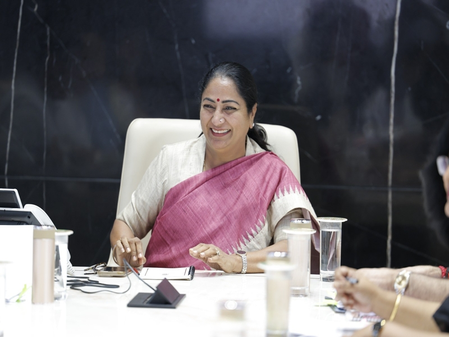
Delhi Chief Minister Rekha Gupta revealed plans to merge Guru Teg Bahadur Hospital (GTB), Delhi State Cancer Institute (DSCI), and Rajiv Gandhi Super Speciality Hospital (RGSSH) to establish an autonomous institution akin to AIIMS. This integration aims to bolster healthcare services and improve medical education by increasing MBBS and postgraduate (PG) seats significantly.
Furthermore, the Institute of Human Behaviour and Allied Sciences (IHBAS) is set to transform into a second National Institute of Mental Health and Neurosciences (NIMHANS-2). The primary goal of this initiative is to expand PG seats, enabling more doctors to undergo specialized training and elevating healthcare quality.
The consolidation of departments and disciplines across GTB Hospital, DSCI, and RGSSH will eliminate fragmentation of resources and manpower, enhancing efficiency. Faculty members will be consolidated, with associate professors supporting two PG seats each and professors supporting three, in alignment with medical standards.
Efforts are underway to increase seats in departments like radiology, pathology, and anaesthesia post-integration. For instance, radiology seats may rise to 22, pathology to 26, and anaesthesia to 48. The augmentation will not only stem from merging departments but also from filling vacant faculty positions across hospitals.
New faculty recruitment and introduction of PG courses in specialized departments like radiation oncology, nuclear medicine, and intensive care are planned post-integration. This move will add around 26 new PG seats at DSCI and approximately 14 in super-speciality areas at RGSSH, such as cardiology and cardiac surgery.
The integration project also envisions expanding MBBS seats in the future by enhancing bed strength, patient load, and faculty numbers. The government aims to develop academic infrastructure like hostels and modern laboratories to provide a conducive learning environment for students, emphasizing a holistic approach to healthcare and medical education.
Delhi Chief Minister Gupta highlighted that the initiative not only enhances healthcare delivery but also promotes medical education and research, positioning Delhi as a premier hub for medical education, research, and advanced healthcare services. By optimizing faculty, infrastructure, and medical equipment usage, the government aims to offer students superior training and research opportunities, thereby elevating Delhi’s status in medical treatment and research.
