


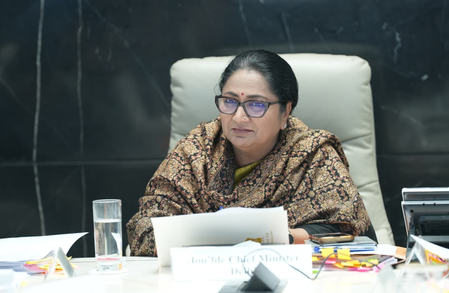
Delhi Chief Minister Rekha Gupta has approved the release of Rs 3,386 crore for constructing three new Metro corridors under Metro Phase IV. These corridors, totaling 47.225 km in length and costing Rs 14,630.80 crore, aim to enhance public transport and reduce pollution in the city. The completion of these projects is expected within four years.
Efforts to improve metro operations are seen as crucial in the fight against pollution, according to the Chief Minister. The first corridor will run from Lajpat Nagar to Saket G-Block, spanning 8.385 km and featuring eight elevated Metro stations. Another proposed corridor, from Inderlok to Indraprastha, will cover 12.377 km with a total of 10 Metro stations, one elevated and nine underground.
The third and longest corridor, extending from Rithala to Kundli and connecting to Haryana, will be 26.463 km long with 21 stations. The total project cost is estimated at Rs 6,230.99 crore, with the Delhi government contributing Rs 1,398.32 crore. These corridors are designed to offer improved travel options to residents across various parts of Delhi.
The Lajpat Nagar-Saket G-Block corridor will pass through key areas like Lajpat Nagar, Andrews Ganj, GK-1, and Saket District Centre. The Inderlok-Indraprastha corridor will connect important locations such as New Delhi Railway Station and Delhi Secretariat-Indira Gandhi International Stadium. The Rithala-Kundli corridor will traverse through multiple sectors and villages, enhancing connectivity in the region.
The construction of these Metro corridors is progressing, with some basic work already initiated. The completion timeline for all three corridors is set at four years. These developments are expected to ease traffic congestion, save commuters’ time, and encourage the use of public transport.
Chief Minister Gupta emphasized that these Phase-IV corridors will modernize Delhi’s public transport system and cater to future needs. The projects aim to provide safe, efficient, and eco-friendly travel options, reducing reliance on private vehicles and aiding pollution control efforts. The expansion of the Metro network is part of the government’s broader vision to transform Delhi into a world-class city.
