


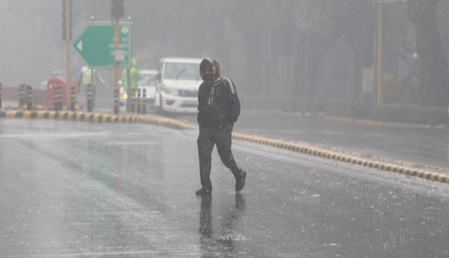
Delhi-NCR experienced a minor improvement in air quality on Wednesday morning due to moderate rainfall the previous day. The Central Pollution Control Board’s data indicated an Air Quality Index (AQI) of 273 at 7 a.m., categorizing it as ‘poor’. Despite this improvement, dense smog persisted in various parts of the national capital, highlighting ongoing pollution concerns.
Area-specific data revealed varied air quality levels across Delhi. Anand Vihar reported an AQI of 280, falling under the ‘poor’ category, while Patpadganj recorded a higher AQI of 304, classified as ‘very poor’. Other monitoring stations such as Ashok Vihar, Bawana, Chandni Chowk, Dwarka Sector 8, and Mundka also registered ‘very poor’ air quality with AQI values ranging from 317 to 362.
The India Meteorological Department (IMD) forecasted generally cloudy conditions with shallow fog in the early morning hours for Delhi. The maximum temperature was expected to range between 17 and 19 degrees Celsius, while the minimum temperature was projected to be around 11 to 13 degrees Celsius. Similar weather patterns were anticipated for neighboring regions like Noida and Gurugram.
On Tuesday, widespread rainfall, thunderstorms, and strong winds were observed in the Delhi-NCR region. Various areas in Delhi received light to moderate showers, with Palam recording 3.4 mm of rainfall, Ridge 3.0 mm, and Pitampura 2.0 mm between 8.30 am and 11.30 am. Looking ahead, the IMD predicted cloudy skies in New Delhi with chances of rain, thunderstorms, lightning, and gusty winds on February 1. Gurugram and Noida were also expected to experience similar weather conditions on February 1 and 2.
