


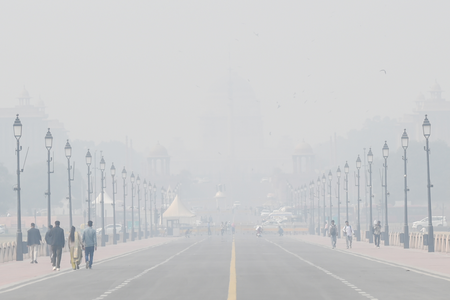
The national capital, Delhi, faced ongoing hazardous air pollution on Thursday, with the Air Quality Index (AQI) remaining in the ‘very poor’ category at 377. Pollution levels in various parts of the city, including the Swaminarayan Akshardham temple area, ITO, and AIIMS, continued to be alarmingly high. Areas like Anand Vihar, Ashok Vihar, and Wazirpur also reported concerning AQI levels.
Several pollution hotspots in Delhi, such as Punjabi Bagh, RK Puram, and Chandni Chowk, maintained ‘very poor’ air quality with AQI readings above 300. The city’s response included doubling parking charges at authorized sites during severe pollution levels to discourage private vehicle use and reduce emissions. Despite a slight improvement, authorities are vigilant due to the persistent challenge of pollution during the winter season.
The India Meteorological Department reported moderate to dense fog in Delhi, complicating the situation further. With temperatures around 7.4 degrees Celsius and cloudy skies forecasted for January 22, light rain accompanied by thunderstorms and gusty winds is expected. Cold wave conditions and dense fog also affected parts of North India, with Adampur recording the lowest temperature at 2.6 degrees Celsius.
