


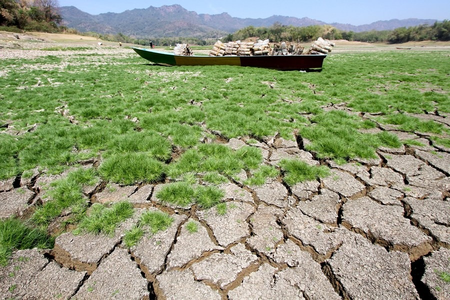
The World Meteorological Organization (WMO) stated that the Earth’s climate is currently more out of balance than ever before due to rising greenhouse gas levels, leading to ongoing warming of the atmosphere and oceans, and ice melting. The WMO marked World Meteorological Day on March 23 under the theme “Observing Today, Protecting Tomorrow.” On the same day, the WMO released the State of the Global Climate report for 2025, which assessed various critical climate indicators such as greenhouse gas concentrations, surface temperature, ocean heat, acidification, sea level rise, Antarctic sea ice extent, and glacier melt.
The report highlighted that the years from 2015 to 2025 were the warmest 11 years on record, with 2025 ranking as the second or third hottest year on record, registering approximately 1.43 degrees Celsius above the 1850-1900 average. Global extreme weather events like severe heatwaves, heavy rainfall, and tropical cyclones have caused significant disruptions and damages worldwide, underscoring the vulnerability of interconnected global economies and societies.
Furthermore, the report revealed that the ocean is continuing to warm and absorb carbon dioxide at an alarming rate. In the past two decades, the ocean has absorbed carbon dioxide equivalent to about 18 times the annual human energy consumption. In 2025, the ocean’s heat content, measured up to a depth of 2,000 meters, reached its highest level since records began in 1960, surpassing the previous record set in 2024.
Data from various monitoring stations indicated a continuous rise in the levels of the three primary greenhouse gases – carbon dioxide, methane, and nitrous oxide – throughout 2025. The report also introduced Earth’s energy imbalance as a crucial climate indicator for the first time. This balance measures the rate at which energy enters and exits the Earth’s system, as reported by Xinhua news agency. Earth’s energy imbalance has been on the rise since observations began in 1960, particularly over the last two decades, reaching a new peak in 2025.
