


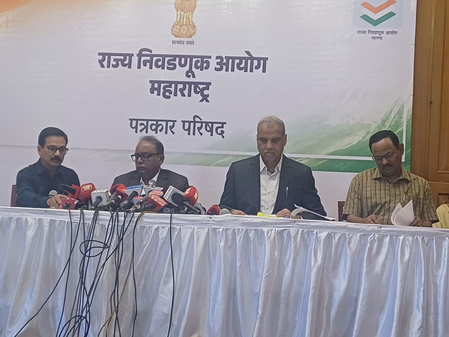
The high-decibel election campaign for 29 municipal corporations, including the Brihanmumbai Municipal Corporation (BMC), has ended. Specialized teams are now monitoring the Model Code of Conduct. The state is now in a “silent period” before voting on January 15, with results on January 16.
These elections are crucial, seen as a test of the state’s pulse across major urban centers like Mumbai, Pune, Thane, Nashik, and Nagpur. A total of 3.48 crore people will vote for 2,869 seats in these civic bodies. The BMC, being India’s wealthiest civic body, remains a key focus.
In the BMC elections, 1,729 candidates are vying for 227 seats, with nearly 50% reserved for women. Major coalitions like Mahayuti and Maha Vikas Aghadi clashed over infrastructure, welfare schemes, and urban redevelopment. The campaign highlighted various promises and schemes for the city’s development.
Chief Minister Devendra Fadnavis and other leaders campaigned extensively for their respective alliances. Notably, this election marks the Shiv Sena’s first BMC election since the 2022 split. The Congress party has projected a strong image by aligning with other parties strategically.
The elections for the 29 municipal corporations come after a gap of over six years. The battlegrounds include various cities in the Mumbai Metropolitan Region and other urbanized areas. Star campaigners like Mohammad Azharuddin, Asaduddin Owaisi, and K Annamalai were actively involved in the campaign.
Populist promises for women and various manifesto focuses have shaped the campaign discourse. Seat-sharing tallies and strategies have been key points of discussion. The Election Commission is ensuring transparency by using updated electoral rolls and taking measures to prevent duplicate voting.
