


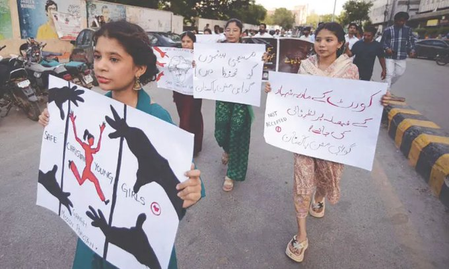
The European Parliament has passed a resolution denouncing the abduction, forced conversion, and underage marriage of girls from religious minorities in Pakistan. The resolution highlighted the case of Maria Shahbaz, a 13-year-old Pakistani Christian girl who was abducted, converted to Islam, and forcibly married in March 2026. Members of the European Parliament emphasized the importance of providing her with legal representation, family access, and psychological assistance.
The resolution referenced 2025 UN data, revealing that in Pakistan, around 75% of women and girls affected by forced conversion through marriage were Hindus, with the remaining 25% being Christians. The MEPs called for Maria to have access to legal representation, family support, and psychological care. They also condemned similar abuses against underage girls from religious minorities, emphasizing that her case represents a broader issue of human rights violations faced by minorities in Pakistan.
The European Parliament urged Pakistani authorities to fully enforce the national framework to combat child marriage, as some provinces already do, and to establish a national mechanism to address complaints from families of abducted or forcibly converted minority girls. Additionally, MEPs advocated for the safeguarding of religious minorities throughout Pakistan and called on the government to investigate all cases involving minors or coercion through transparent and independent processes.
Furthermore, the MEPs urged Pakistani authorities to prosecute those responsible, enhance the country’s judicial system, and facilitate the safe return of abducted girls to their families. United Nations experts had previously expressed serious concerns over the ongoing abduction, forced conversion, and marriage of women and girls from minority communities in Pakistan, attributing the situation to a climate of impunity that perpetuates these practices across the nation.
The experts stressed that any change in religion or marriage should be free from coercion and based on genuine consent, which is impossible when the victim is a child. They highlighted the lack of adequate measures by the Pakistani government to address the root causes of forced conversion, including gender inequality, poverty, social exclusion, discrimination, religious intolerance, and impunity. The experts emphasized the need for ensuring freedom of religion and equality for all individuals without discrimination.
