


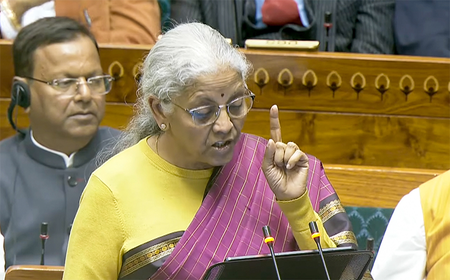
Finance Minister Nirmala Sitharaman announced a significant increase in the Securities Transaction Tax (STT) on futures and options during the presentation of the Union Budget 2026-27 in Parliament. The hike in STT is substantial and will raise transaction costs for traders in the derivatives segment, leading to a 150% increase in the tax on futures and a 50% increase on options. This move was linked to a stock market crash on the same day by experts.
The STT on futures has been raised from 0.02% to 0.05%, while for options, it has been increased from 0.10% to 0.15%. Aakash Shah from Choice Equity Broking noted that this change is significant and could directly impact F&O volumes, especially for high-frequency traders and cost-sensitive strategies. While it may boost short-term tax collections, it could potentially reduce liquidity and market depth in the derivatives segment.
STT is a tax imposed on the value of securities transactions conducted on recognized stock exchanges in India, covering equities, equity mutual funds, and derivatives like futures and options. The tax is collected at the time of the transaction, regardless of whether the investor gains or loses. Introduced in India in 2004, STT aimed to streamline tax collection and combat evasion in equity and derivatives trading, coinciding with the removal of long-term capital gains (LTCG) tax on equities.
In the previous Union Budget, the government had also raised capital gains taxes, elevating LTCG tax to 12.5% from 10% and short-term capital gains (STCG) tax to 20% from 15%. This move to increase STT rates aligns with the government’s efforts to balance speculation control with maintaining India’s competitiveness as a global trading hub.
