


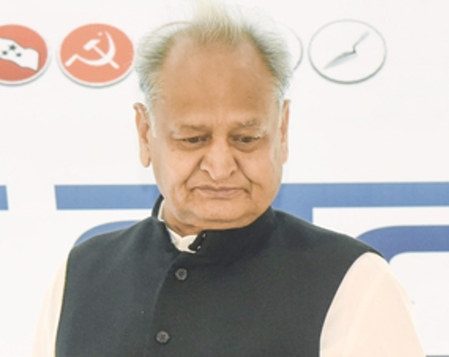
Former Rajasthan Chief Minister Ashok Gehlot showcased Rajasthan’s healthcare accomplishments at a press conference in Kerala. He introduced the “Rajasthan Model” as a national standard, emphasizing initiatives like the ‘Right to Health’ and the Mukhyamantri Chiranjeevi Swasthya Bima Yojana that propelled Rajasthan to a healthcare leader. Gehlot criticized Kerala’s healthcare standards under the Left government, contrasting it with Rajasthan’s progress.
Under the Mukhyamantri Chiranjeevi Scheme, Rajasthan families receive cashless treatment up to Rs 25 lakh and Rs 10 lakh accidental insurance coverage, lessening financial burdens during serious illnesses. The scheme covers high-cost treatments like cancer care, cardiac surgeries, and organ transplants for free in both government and private hospitals. Gehlot mentioned that around 50 lakh patients have benefited from approximately Rs 5,000 crore worth of free treatments.
Rajasthan’s health insurance coverage stands at about 93%, surpassing the national average of 42% and outperforming states like Gujarat, Maharashtra, and Uttar Pradesh. Gehlot highlighted the state’s Right to Health law, providing free emergency treatment for all individuals, even in private hospitals. Rajasthan’s Nirogi Rajasthan Scheme offers free medicines, diagnostics, and complete treatment in government hospitals, setting a precedent for comprehensive healthcare services.
Discussing infrastructure growth, Gehlot noted Rajasthan’s expansion of its healthcare network with numerous sub-centres, Primary Health Centres (PHCs), and Community Health Centres (CHCs). The state boasts 36 PHCs and 11 CHCs per lakh population, surpassing Kerala’s ratios. Rajasthan has witnessed a 60% increase in government hospital bed capacity and a significant rise in ICU beds, enhancing critical care services.
Improvements in health indicators include a 95% institutional delivery rate in Rajasthan, surpassing the national average. Vaccination coverage has increased to 81%, maternal and infant mortality rates have declined, and the Infant Mortality Rate is now below the national average. Gehlot highlighted advancements in medical education, with the establishment of new medical and nursing colleges, increased seats, and the initiation of Marwar Medical University for enhanced research.
Gehlot’s reforms aimed to make Rajasthan self-reliant in healthcare, ensuring individuals do not have to sell assets for medical treatment. The Rajasthan Model is now recognized as a successful healthcare reform example nationwide.
