


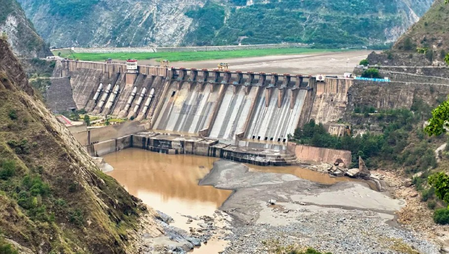
The future of the Indus Waters Treaty (IWT) relies on Islamabad’s willingness to establish genuine trust, renounce terrorism as a state policy tool, and engage positively with India, as per a report. India suspended the IWT after the Pahalgam terror attack, attributed to Pakistan-backed militants, which resulted in the deaths of 26 civilians. Despite provocations from Pakistan, India has upheld the IWT for over six decades, emphasizing the importance of both sides’ commitment to peaceful relations.
Durable agreements endure not just due to legal bindings but also because of the mutual commitment to peaceful coexistence, states a report in The Global Kashmir. The IWT, signed in 1960 between India and Pakistan with the World Bank’s facilitation, has been upheld for over six decades. India has consistently honored the treaty, even amidst hostilities from Pakistan, while questions arise about extending concessions to a neighbor undermining regional stability.
The IWT, considered one of the world’s most enduring water-sharing agreements, granted significant water rights to Pakistan over the western rivers despite their origin in Indian-controlled territories. India retained rights over the eastern rivers, accepting restrictions on the western rivers’ utilization. The report highlights India’s compromises for regional stability, emphasizing the need for Pakistan to reciprocate cooperation for lasting peace.
Pakistan’s failure to reciprocate India’s cooperative spirit is underscored in the report, citing support for terror groups responsible for attacks in India. Incidents like the Parliament attack, Mumbai attacks, Uri, and Pulwama have strained trust, prompting India to reassess bilateral engagement frameworks. Pakistan’s tendency to internationalize disputes over Indian hydroelectric projects, despite treaty adherence, has led to delays in India’s infrastructure development, noted the report.
